Small business cash flow is about more than making sales. You also need to make sure money is available when bills, payroll, loan payments, and other expenses come due.
For that reason, cash flow becomes important.
For example, a business may record sales and even report a profit, but still experience a cash shortage if customers pay late or expenses must be paid before incoming funds arrive. Understanding how money moves through your business can help you plan ahead, prepare for upcoming obligations, and make informed financial decisions.
In this beginner’s guide, we’ll explain what cash flow means, how to track it, common warning signs, and practical habits that can help you manage it.
What Is Cash Flow?
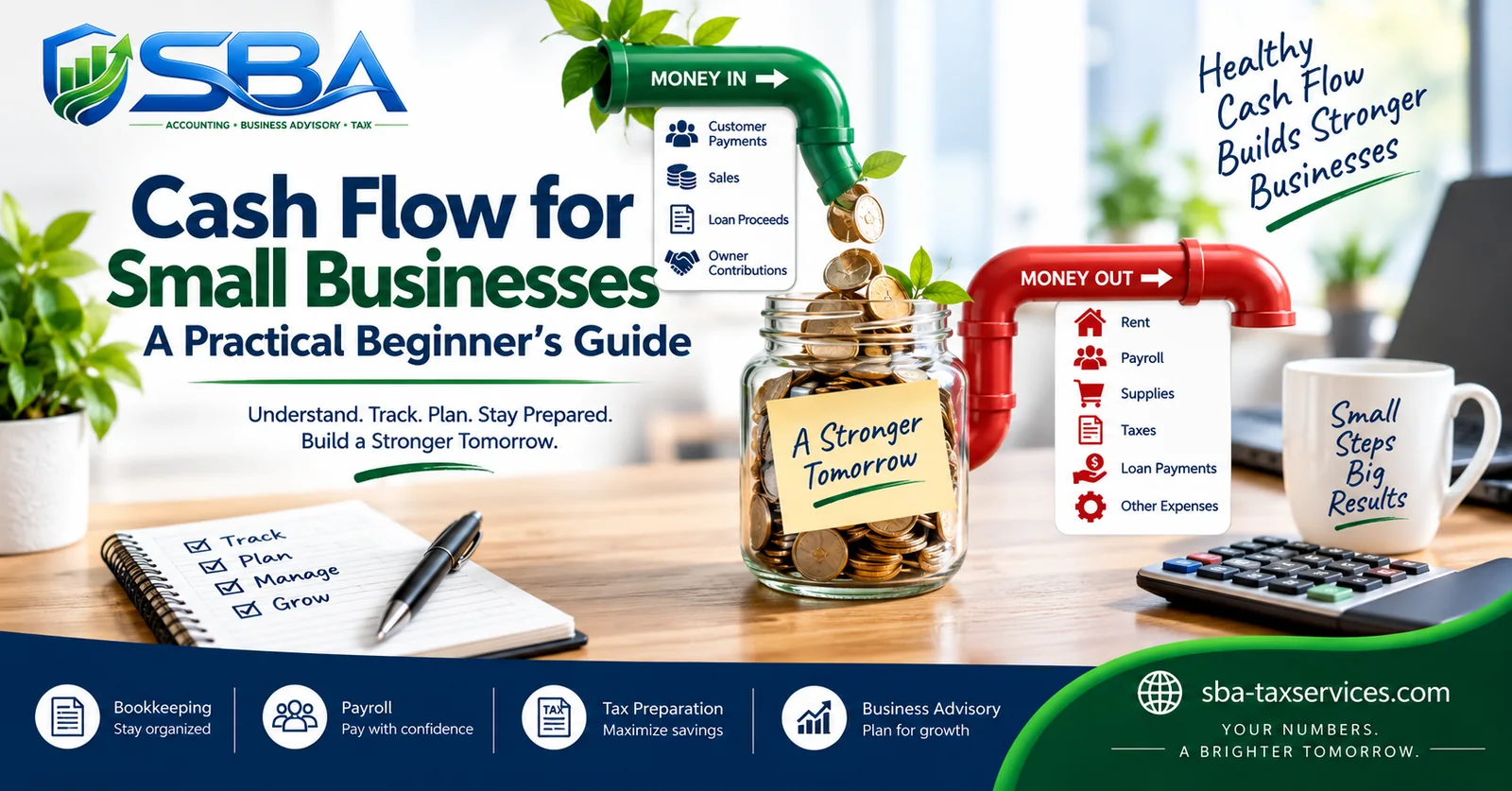
Cash flow is the movement of money into and out of a business over a particular period.
- Cash inflows are money received, such as customer payments, cash sales, loan proceeds, or owner contributions.
- Cash outflows are payments made, such as rent, payroll, supplier bills, taxes, loan payments, and other business expenses.
When more cash comes in than goes out during a period, the business has a positive net cash flow for that period. When more cash goes out than comes in, it has a negative net cash flow.
A simple calculation is:
Net cash flow = Total cash inflows − Total cash outflows
This calculation describes cash movement during the period. It is not the same as profit, and it does not by itself show the full financial position of a business.
Cash Flow vs. Revenue vs. Profit
These terms are related, but they describe different things.
| Term | What it means |
|---|---|
| Revenue | Income earned from selling products or services. |
| Profit | What remains after the relevant expenses are deducted from revenue. |
| Cash flow | The movement of cash into and out of the business during a period. |
For example, a business may complete a $10,000 sale in March but not receive payment until April. Depending on its accounting method, the revenue may be recorded in March even though the cash arrives in April.
Meanwhile, the business may need to pay rent and payroll in March. This timing difference can create pressure on available cash even when the business has recorded revenue.
Key takeaway: Revenue tells you about sales, profit tells you about financial performance, and cash flow helps you understand the timing of money received and paid.
Why Cash Flow Matters for Small Businesses
In practical terms, keeping an eye on available funds can help you:
1. Prepare for regular expenses
Rent, payroll, utilities, supplier invoices, insurance, and loan payments may be due on specific dates. A cash flow review helps you compare expected payments with the money likely to be available.
2. Identify potential shortfalls earlier
If several large bills are due before customers are expected to pay, a forecast can help you identify the gap in advance and consider appropriate options.
3. Plan for seasonal changes
For instance, some businesses experience predictable busy and slow periods. Reviewing previous patterns alongside upcoming commitments can help inform cash planning.
4. Make more informed business decisions
Hiring, purchasing equipment, expanding operations, or taking on new commitments can affect cash needs. A small business cash flow forecast helps you examine the timing and estimated impact of those decisions.
The U.S. Small Business Administration recommends maintaining proper financial records and using financial information to help manage business operations. For additional guidance, see its financial management guidance for small businesses.
How to Track Money Coming In and Going Out
You can monitor the movement of money with a simple spreadsheet or accounting software that provides cash flow reports. The important thing is to maintain reliable records and review them consistently.
Step 1: Record cash received
Track payments received from customers and other sources. Include the date, amount, source, and any relevant reference.
Step 2: Record cash paid out
Track payments such as payroll, rent, supplies, taxes, loan payments, and other business costs. Categorizing transactions can make patterns easier to identify.
Step 3: Reconcile your records
Compare your records with bank and other relevant financial statements. Investigate differences, missing transactions, or payments that have not cleared.
Step 4: Review upcoming receipts and payments
List expected customer payments and upcoming obligations. Use realistic dates rather than assuming every invoice will be paid immediately.
Step 5: Compare forecasts with actual results
At regular intervals, compare what you expected to happen with what actually happened. Update your estimates when payment timing, expenses, or business conditions change.
A cash forecast does not need to predict the future perfectly to be useful. Comparing estimates with actual results can help you notice changes and adjust your plans.
Five Cash Flow Habits to Build
These practical habits can support small business cash flow and become part of your regular financial routine:
- Invoice promptly. Send accurate invoices as soon as appropriate and make payment instructions clear.
- Follow up on overdue invoices. Review outstanding customer balances and follow up according to your established policies.
- Review upcoming bills. Keep track of due dates so that large or clustered payments do not take you by surprise.
- Update your cash flow forecast. Refresh estimates when sales, expenses, or expected payment dates change.
- Maintain organized financial records. Accurate, up-to-date bookkeeping makes it easier to review cash activity and investigate discrepancies.
These habits do not guarantee that a business will avoid cash shortages. Their purpose is to improve visibility and support more informed planning.
Cash Flow Warning Signs to Watch
Pay attention if your business regularly experiences any of the following:
- Customer payments arrive later than expected.
- You frequently struggle to cover bills when they are due.
- You rely on short-term borrowing to cover routine operating costs.
- Several large expenses are approaching, but expected receipts are uncertain.
- Your cash balance is declining even though sales appear steady.
- Your records are not current enough to show what is available and what is owed.
However, one warning sign alone does not establish that a business is in financial trouble. Review the circumstances, timing, and underlying records to understand what is happening.
A Simple Cash Flow Example
Imagine a small business begins the month with $8,000 in cash.
During the month:
| Cash activity | Amount |
|---|---|
| Starting cash balance | $8,000 |
| Customer payments received | +$12,000 |
| Operating payments made | −$9,000 |
| Equipment payment made | −$2,500 |
| Ending cash balance | $8,500 |
In this example, the business received $12,000 and paid out $11,500, resulting in net cash flow of $500 for the month.
Its ending cash balance is $8,500 because it began with $8,000.
This simplified example does not include every possible cash flow category, financing activity, or accounting adjustment. It illustrates how the starting balance and cash received and paid affect the ending balance.
How Bookkeeping Supports Financial Planning
Cash flow planning depends on having useful financial information. If transactions are missing, expenses are miscategorized, or customer balances are inaccurate, your cash flow review may not reflect the business’s actual position.
Consistent bookkeeping can help you organize income and expenses, reconcile accounts, monitor receivables and payables, and prepare reports that support planning.
If you need help keeping your records organized, explore SBA’s Bookkeeping Services.
You can also learn about Business Tax Advisory Services when you need to consider how tax obligations fit into your financial planning.
Frequently Asked Questions
Is cash flow the same as profit?
No. Profit measures revenue minus relevant expenses, while cash flow tracks cash received and paid during a period. Differences in payment timing and non-cash accounting items can cause them to differ.
Can a profitable business have cash flow problems?
Yes. For example, a business may record revenue before collecting customer payments while still needing to pay its bills. The timing difference can create a cash shortage.
How often should a small business review cash flow?
The appropriate frequency depends on the business’s activity and financial circumstances. Some businesses benefit from reviewing cash frequently, while others may use a weekly or monthly routine. Update the forecast when important assumptions change.
What should a basic cash flow forecast include?
It should generally include the starting cash balance, expected cash receipts, planned payments, the period covered, and the projected ending balance. Include relevant categories for your business and update estimates as new information becomes available.
Does positive cash flow always mean a business is profitable?
No. Positive cash flow during a period does not necessarily mean the business is profitable. Cash received from borrowing or owner contributions, for example, can increase cash without representing revenue from ordinary business operations.
Final Thoughts
Managing available funds is an important part of running a business because the timing of money received and paid affects your ability to meet obligations and plan ahead.
To build a consistent routine, start by recording cash activity accurately, reviewing upcoming receipts and payments, and comparing forecasts with actual results. Over time, a consistent routine can give you a clearer view of your business’s cash position and help you prepare for changing financial needs.
Need help organizing your business finances? SBA Accounting and Tax Services PLLC offers bookkeeping, payroll, tax preparation, sales tax, and business advisory services.
Visit SBA Accounting and Tax Services PLLC to learn more or contact our team.
This article is for general educational purposes only and is not individualized accounting, tax, or financial advice. Requirements and circumstances vary by business and jurisdiction.