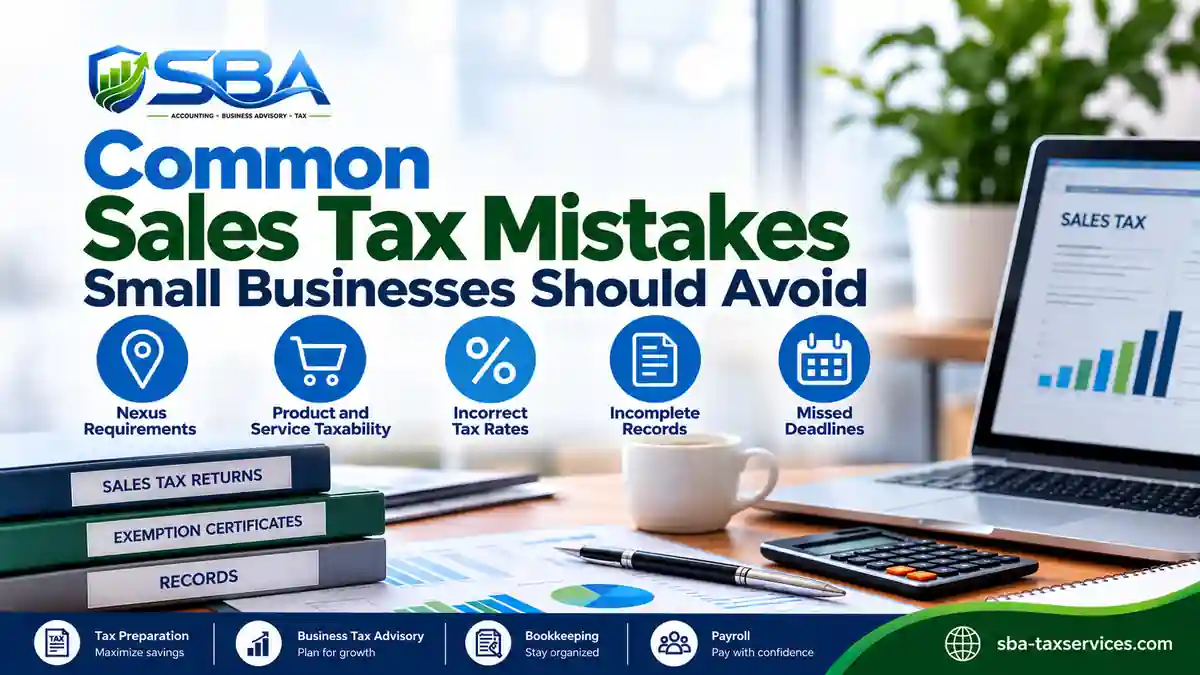
Sales tax mistakes can lead to avoidable notices, extra work, and unexpected costs for small businesses. Problems do not always start with a missed payment. They can begin with registration, deciding whether a sale is taxable, applying the correct rate, documenting an exemption, or keeping records that support a return.
Because sales tax rules vary by state and sometimes by locality, a process that works in one place may not work everywhere. A reliable approach is to check the rules for each jurisdiction, document your decisions, and review your sales tax process regularly.
Your compliance review sequence
Registration → Classification → Rates → Records → Deadlines → Reconciliation
In This Guide
Key takeaway: Prevent common sales tax mistakes by confirming where you have an obligation, applying the correct tax treatment, keeping supporting records, tracking due dates, and reconciling every return to your books.
1. Avoid Sales Tax Mistakes With Registration and Nexus Rules
One of the most consequential sales tax mistakes is assuming that tax obligations only apply where a business has a storefront. Physical presence can create an obligation, and some states also require remote sellers to collect tax when they meet economic nexus rules. Thresholds and criteria vary; states may consider sales revenue, transaction counts, or other factors.
Before selling into a new state or expanding online, review the applicable state guidance and determine whether registration is required. Do not assume a marketplace, payment processor, or tax application has resolved every obligation for you. Also check whether a state requires a return for a period with no taxable sales.
For background on remote-seller rules, review the Streamlined Sales Tax remote seller FAQs. Confirm the actual requirements with the relevant state tax agency.
2. Check How Your Products and Services Are Classified
Another common sales tax mistake is treating every product or service as taxable—or exempt—in every location. Some items may be exempt, taxed at a special rate, or subject to specific conditions. Rules can also distinguish between product types, bundled transactions, delivery charges, and services connected to a sale.
Avoid relying on assumptions such as “this service is never taxable” or “the same item is taxed everywhere.” Keep a documented taxability reference for the products and services you sell, and review it when your offerings or the rules change. When a transaction is unclear, check official guidance or ask a qualified tax professional before treating it as exempt.
3. Prevent Sales Tax Rate Mistakes
Applying a rate from memory or using an outdated rate table can lead to undercollection or overcollection. Depending on the jurisdiction, the correct rate may depend on delivery location, transaction type, product taxability, and local rules.
Use current, jurisdiction-appropriate rate information and verify how sourcing rules apply to each transaction. If you use software, confirm that its location settings and product tax codes are accurate. Software can help calculate tax, but it cannot reliably correct incomplete setup or inaccurate product classifications on its own.
For businesses operating in Virginia, the Virginia Department of Taxation’s Retail Sales and Use Tax guidance explains state requirements, filing, and payment information. Check the rules for the specific jurisdiction where your business has an obligation.
4. Keep Complete Supporting Records
Incomplete documentation is one of the sales tax mistakes that can make an audit, notice, or correction much harder to handle. Your records should explain how reported sales, deductions, exemptions, and tax collected were calculated.
Keep organized records of sales invoices, receipts, taxable and nontaxable sales, tax collected, refunds, credits, purchase records, exemption or resale certificates, filed returns, payment confirmations, and correspondence with tax agencies. Retention periods and documentation rules vary by jurisdiction, so check the official requirements that apply to your business rather than using one universal retention period.
For a practical recordkeeping workflow, see our guide to sales tax records small businesses should track. California’s tax agency also provides official guidance on keeping good business records; use the rules for your own jurisdiction when determining what to retain and for how long.
5. Avoid Filing and Payment Mistakes
How to Avoid Filing Deadline Mistakes
Filing schedules may be monthly, quarterly, annually, or otherwise assigned by the tax agency. Sales tax mistakes happen when a business assumes its schedule has not changed, overlooks a notice, or relies on a calendar that does not reflect the official due date. Record the filing frequency and due date for every jurisdiction where you are registered, and set reminders well before each deadline.
Confirm the payment went through
Submitting a return and paying the amount due are related but separate steps. A return may be filed successfully while the payment fails, is sent to the wrong account, or is not completed by the deadline. After filing, verify payment status and save the confirmation for both actions. Do not treat a return confirmation as proof of payment unless it confirms the payment itself.
6. Reconcile Returns and Correct Errors Promptly
Your sales records, point-of-sale reports, accounting system, tax return, and payment records should tell a consistent story. If they do not, you may miss a duplicate entry, refund, mapping error, or transaction that was treated incorrectly.
Before filing, compare sales reports with your books, review taxable and nontaxable totals, check tax collected, account for refunds and adjustments, and investigate material differences. After filing, reconcile the reported liability and payment to the appropriate accounting records. Consistent bookkeeping support can help maintain a clear audit trail.
Also review tax agency notices promptly, note response deadlines, and keep copies of correspondence. If you discover an error, determine whether an amended return or another correction method is required in that jurisdiction. Do not assume every error can simply be corrected on a future return; consider professional advice when the amount or issue is significant.
7. Sales Tax Mistakes: Prevention Checklist
- Review where your business has physical or economic nexus.
- Confirm registration requirements before selling in a jurisdiction.
- Document how your products and services are classified for tax purposes.
- Verify current rates, location settings, and sourcing rules.
- Collect and retain valid exemption or resale documentation where applicable.
- Maintain invoices, sales reports, returns, payments, and agency correspondence.
- Track each jurisdiction’s filing frequency and due dates.
- Reconcile sales, tax collected, returns, and payments before closing the period.
- Investigate differences and respond to notices promptly.
- Review the process when your business, products, sales channels, or jurisdictions change.
Sales Tax Mistakes: Frequently Asked Questions
What are the most common sales tax mistakes?
Common sales tax mistakes include overlooking registration obligations, misclassifying taxable sales, using incorrect rates, missing filing or payment deadlines, keeping incomplete records, and failing to reconcile returns to business records.
Does every small business have to collect sales tax?
No single answer applies everywhere. Requirements depend on the jurisdiction, the business’s activities and connections to that jurisdiction, the products or services sold, and applicable exemptions. Check official state and local guidance for your circumstances.
What records should a small business keep?
Typically, businesses should organize sales invoices, receipts, tax collected, refunds, exemption certificates, purchase records, filed returns, payment confirmations, and relevant agency correspondence. Exact requirements and retention periods vary, so confirm local rules.
What should I do if I discover an error?
Identify the transaction and period affected, preserve supporting records, and review the tax agency’s correction instructions. Depending on the situation, an amended return or another process may be required. Do not assume every error can be corrected on a future return.
Can Sales Tax Software Reduce Errors?
Software can assist with rate calculations, tracking, and filing workflows, but accurate setup remains essential. Review product tax codes, jurisdictions, nexus assumptions, and filing settings, and periodically compare system reports with your accounting records.
Final Thoughts: Make Compliance Part of Your Routine
Sales tax mistakes are easier to prevent when compliance is part of a regular bookkeeping routine rather than a last-minute task. Keep jurisdiction information current, document tax decisions, track deadlines, and reconcile returns before and after filing.
For more foundational guidance, read our beginner’s guide to sales tax for small businesses. If you need help strengthening your financial recordkeeping process, SBA Accounting and Tax Services PLLC offers support for small businesses.
Make your business finances easier to manage
Clear records and a consistent review process can help you stay organized throughout the year. Explore SBA’s accounting and tax services for support with your business’s financial records and tax responsibilities.
Explore Bookkeeping Services →
Prefer to start with the full range of services? Visit SBA Accounting and Tax Services PLLC.
Disclaimer: This article provides general educational information and is not legal, tax, or accounting advice for a specific situation. Sales tax laws and procedures vary and may change. Confirm current requirements with the relevant tax authority or a qualified professional.

One Response