Sales tax support · Business Guides
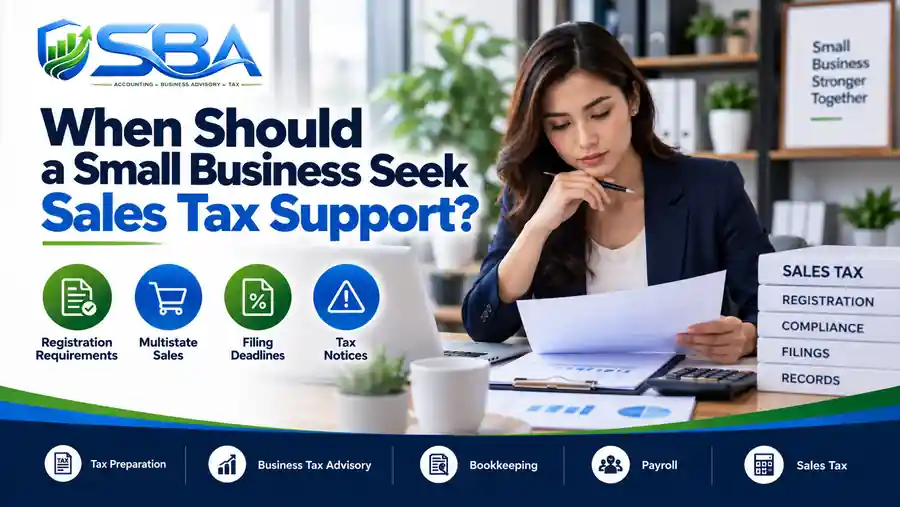
Sales tax can seem manageable when a business has a small number of products, customers, and transactions. However, as sales channels expand or requirements become harder to track, the work can quickly become more complicated. Sales tax support for small business can help owners identify questions that need attention, organize records, and build a more reliable compliance process.
Key takeaway: Consider professional support when you enter new states, change what or how you sell, receive a tax notice, cannot reconcile sales tax records, or struggle to keep filings on schedule. The right next step depends on the states involved and your specific facts.
When Sales Tax Support for Small Business Becomes Useful
Sales tax responsibilities are not identical in every jurisdiction. For that reason, registration, taxability, collection, filing frequency, exemptions, and record-retention requirements can vary. For example, Virginia Tax explains state retail sales and use tax responsibilities, while remote sellers may need to review other states’ rules when their activities create a registration or collection obligation.
In many cases, outside help is useful before a problem occurs. For example, a review can help you understand what needs to be checked, which records to maintain, and where your current process may have gaps. However, it does not replace checking the rules that apply to your particular business.
Seven Signs You May Need Sales Tax Support for Small Business
1. Sales Tax Support for Small Businesses Selling in Multiple States
Online orders, remote customers, trade shows, inventory, or other business activity can make state-by-state review important. Because economic-nexus rules differ, do not assume one state’s threshold or requirements apply everywhere. Instead, review your sales and activity by jurisdiction and verify current rules before deciding whether registration is required.
2. Sales Tax Support When Product Taxability Is Unclear
In addition, taxability can depend on the item or service, the state, exemptions, and how a transaction is structured. Whenever you add products, bundles, subscriptions, delivery charges, or new services, document the change and review its potential tax treatment rather than relying on an old assumption.
3. Changing Sales Channels May Call for Sales Tax Support
For example, moving from in-person sales to e-commerce, adding a marketplace, using a fulfillment provider, or opening a new location can change the questions you need to ask. Marketplace facilitators may collect tax on certain transactions; however, sellers can still have registration, filing, or other obligations in some situations. Therefore, check the relevant state guidance and marketplace records.
4. When to Seek Sales Tax Support After a Tax Notice
For instance, a notice may request information, identify a missing return, show a balance, or raise a question about a filing. First, read the notice carefully, note the response date, preserve the envelope and attachments, and gather the related returns and records. If the issue is unclear or the deadline is close, seek qualified help promptly. Above all, do not ignore it.
5. Sales Tax Support When Reports Do Not Reconcile
To identify discrepancies, collected tax, point-of-sale reports, marketplace statements, accounting records, filed returns, and payments should be reviewed together. Differences may result from timing, refunds, exempt sales, marketplace treatment, or data-entry errors. Therefore, reconcile each period and investigate differences before filing or amending a return.
6. Sales Tax Support for Missed Filing Deadlines
Moreover, registration, returns, payments, exemption documentation, and account updates may have separate deadlines. As a result, maintain a calendar by jurisdiction and confirm the filing frequency and due date assigned by each tax authority. In addition, a process review can help identify recurring gaps and clarify who owns each task.
7. When Sales Tax Compliance Takes Too Much Time
If compliance work repeatedly interrupts customer service, bookkeeping, or operations, a more consistent process may be worthwhile. In that case, support might involve a one-time review, help with a specific notice, periodic reconciliation, or an ongoing compliance arrangement, depending on the business’s needs.
What Sales Tax Support for Small Business Can Include
First, the scope should match the issue. Depending on qualifications, engagement terms, and the jurisdictions involved, support may include:
- Reviewing where the business may have registration or collection obligations.
- Checking product and service taxability questions that need jurisdiction-specific research.
- Organizing sales, exemption, marketplace, and filing records.
- Reconciling sales reports, returns, and tax payments.
- Helping prepare a response to a notice or identify when specialist representation is needed.
- Building a calendar and repeatable process for returns and payments.
For practical recordkeeping guidance, review our sales tax records guide and sales tax compliance checklist. If you are approaching a filing date, our guide to sales tax filing and remittance covers the steps to review.
How to Choose Sales Tax Support for Your Business
Before engaging a provider, describe the problem clearly and ask what the engagement does—and does not—cover. Then, consider these questions:
- Does the provider understand the states and sales channels involved?
- Will they review records and explain the assumptions behind their recommendations?
- Are filing, payment, notice-response, and follow-up responsibilities clearly assigned?
- How are fees, deadlines, document requests, and communication handled?
- If a matter requires a specialist or legal representation, will the provider explain that limitation?
Finally, be cautious of promises that every transaction is treated the same in every state. Reliable support should explain what is known, what needs confirmation, and which official guidance applies.
How to Prepare for Sales Tax Support for Small Business
To make a review more efficient, gather the information you already have. In addition, you do not need to solve every issue before asking for help. Instead, organize the facts and flag anything uncertain.
Preparation checklist
- States where you have customers, locations, inventory, or other business activity.
- Recent sales reports and marketplace statements.
- Registration details, filed returns, and payment confirmations.
- Product or service descriptions and exemption certificates, where applicable.
- Tax notices and any response deadlines.
- A list of questions, discrepancies, or missed tasks you want reviewed.
Frequently Asked Questions
When Should a Small Business Get Sales Tax Support?
For example, consider support when you enter new markets, change products or sales channels, receive a notice, cannot reconcile records, or have trouble meeting filing and payment deadlines. Ultimately, the right timing depends on the facts and the applicable rules.
Does selling online mean I must collect sales tax in every state?
No. Instead, requirements vary by state and may depend on economic activity, physical presence, transaction type, and other facts. Therefore, review each relevant state’s current guidance before deciding whether registration or collection is required. The Streamlined Sales Tax remote seller FAQs provide background, but state requirements should be verified directly.
What if a marketplace collects sales tax for me?
Although marketplace collection may address some transactions, it does not automatically settle every seller obligation. Therefore, keep marketplace reports and review the rules in the states where you do business. See the Streamlined Sales Tax marketplace seller guidance and confirm the details with the relevant state authority.
Where can I check Virginia sales tax requirements?
For Virginia-specific information, businesses can begin with the official Virginia Tax retail sales and use tax guidance. Confirm current registration, collection, filing, and payment instructions for your circumstances.
Final Thoughts
Ultimately, sales tax support for small business can be especially valuable when growth, changing transactions, notices, or inconsistent records make compliance harder to manage. First, identify the question, gather your records, and check the relevant official guidance. Then choose support that clearly defines responsibilities and helps you maintain a dependable process.
Need Help Organizing Your Sales Tax Process?
SBA Accounting and Tax Services PLLC helps small businesses strengthen bookkeeping and tax processes. Contact us to discuss your needs and determine what support may be appropriate.
This article provides general educational information and is not legal or tax advice for a specific situation. Sales tax requirements vary by jurisdiction and can change. Verify current rules with the applicable tax authority or a qualified professional.