
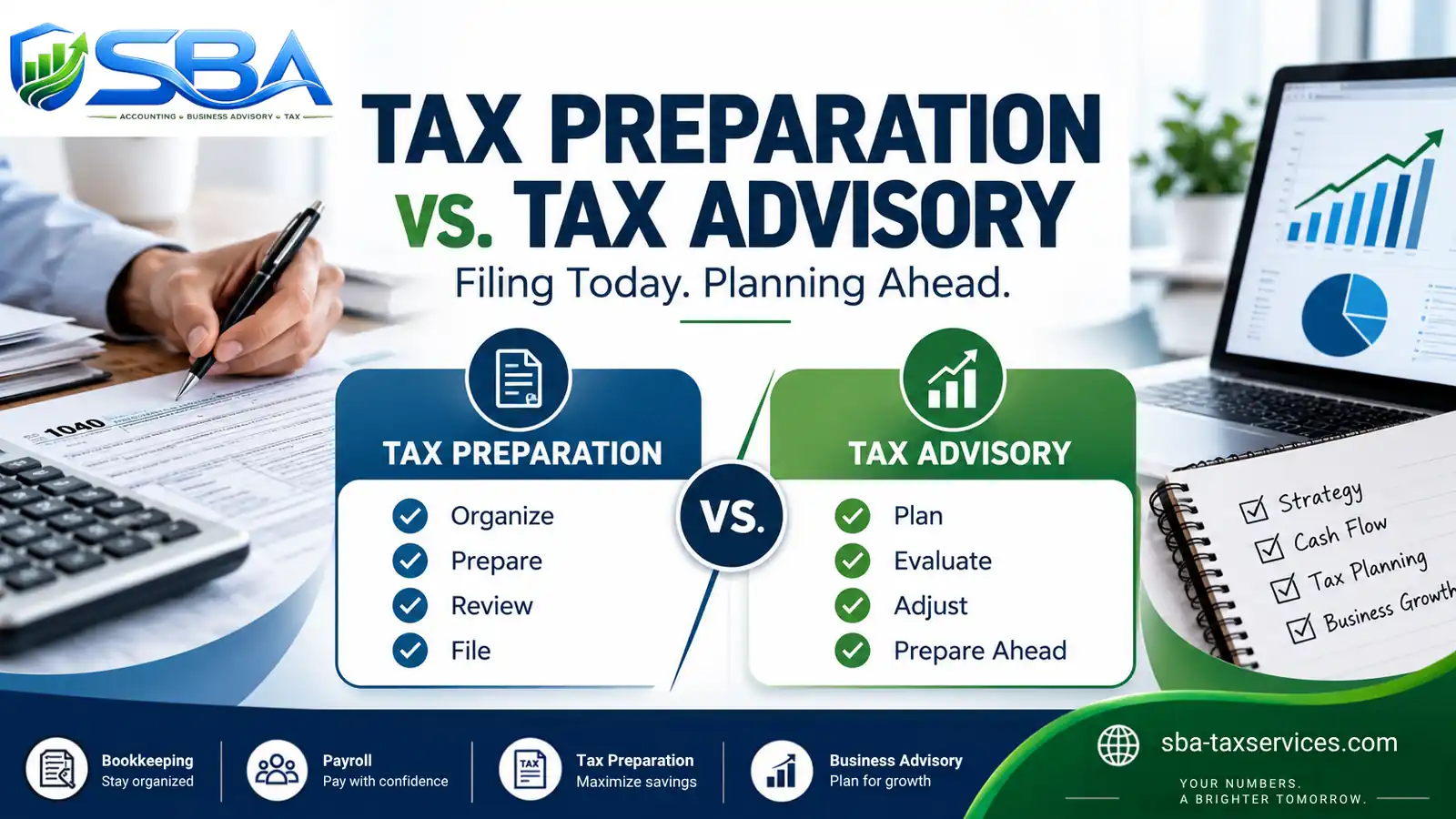
Tax preparation vs tax advisory is an important distinction for small-business owners. Tax preparation generally focuses on gathering financial information, preparing applicable tax returns, reviewing them, and completing the filing process. Advisory is broader and more forward-looking, helping business owners consider tax questions before and during important decisions.
In practice, many businesses may use both services. Tax preparation helps address filing responsibilities, while tax advisory can help an owner evaluate tax considerations throughout the year. Therefore, understanding the difference can make it easier to choose the right type of professional support.
04 When each service helps 05 How they work together 06 Questions & FAQs
What Is Tax Preparation?
Tax preparation is the process of organizing the information needed for a tax return, completing the applicable forms, reviewing the return, and preparing it for filing.
For a business, the exact forms and filing responsibilities depend on factors such as business structure and the types of taxes that apply. The IRS explains that the form of business affects the taxes a business must pay and how those taxes are paid.
What Does Tax Preparation Typically Involve?
Depending on the business and return, tax preparation may involve:
- Reviewing business income
- Reviewing business expenses and supporting records
- Reconciling relevant financial information
- Reviewing applicable deductions and credits
- Preparing applicable tax forms
- Reviewing the completed return
- Completing the filing process
- Maintaining the return and supporting documentation
Moreover, good recordkeeping supports the process. The IRS explains that good records can help a business monitor progress, prepare financial statements, identify income, track deductible expenses, prepare tax returns, and support reported items. See IRS recordkeeping guidance.
What Is Tax Advisory?
Tax advisory is broader than preparing a return. It focuses on tax-related questions, planning considerations, and business decisions that may affect a taxpayer before or during the tax year.
Instead of asking only how to report something after it happened, an advisory conversation can ask what tax considerations should be evaluated before the decision is made.
What Can Tax Advisory Address?
Depending on the professional and engagement, advisory discussions may include:
- Estimated-tax considerations
- Business structure questions
- Timing of income or expenses
- Major purchases or investments
- Changes in ownership
- Hiring employees or changing operations
- Expansion or other major business changes
- Questions arising from prior tax returns
Importantly, advisory is not a promise of a particular tax result. Instead, it helps identify relevant tax considerations so an owner can make decisions with better information.
Tax Preparation vs Tax Advisory: The Main Difference
The simplest way to understand tax preparation vs tax advisory is to compare their primary purpose and timing.
| Tax Preparation | Tax Advisory |
|---|---|
| Primarily focused on preparing and filing applicable tax returns. | Focused on planning and tax-related business decisions. |
| Works largely from financial information for a tax period. | Can address questions before a transaction or business change. |
| Helps complete applicable filing requirements. | Helps evaluate tax considerations before decisions are finalized. |
| Usually tied to filing deadlines. | Can be useful throughout the year. |
Neither service is automatically better. Rather, they answer different questions and can complement one another.
When Does a Small Business Need Tax Preparation?
A business with federal, state, or local tax filing responsibilities may need tax preparation for the applicable returns. The exact requirements depend on the business and jurisdiction.
Tax preparation support can be especially useful when the filing has become more complex or the owner wants professional help organizing and reviewing the information.
Signs You May Need Tax Preparation Support
- Your business return is becoming more complicated.
- You have multiple sources of business income.
- Your business has employees or other tax responsibilities.
- Your records need additional organization before filing.
- You are uncertain which forms may apply.
- You have questions about a prior return.
- You prefer professional assistance with the filing process.
However, preparation does not have to begin with a last-minute scramble. Organized records throughout the year can make the process more manageable.
When Might Tax Advisory Be Useful?
Tax advisory can be useful when a business owner is considering a decision that may have tax implications.
For example, the business may be changing its structure, purchasing significant assets, expanding operations, changing ownership, or experiencing a substantial change in income.
Business Changes Can Create Tax Questions
A business owner may want professional guidance before:
- Changing the business structure
- Buying or selling significant assets
- Adding an owner or changing ownership
- Hiring employees
- Expanding into another location
- Adding a new revenue stream
- Experiencing a significant change in income
- Making another major financial decision
The appropriate tax treatment depends on the facts. Therefore, advisory should identify questions that need evaluation rather than assume a particular outcome.
For broader year-round planning, see SBA’s Business Tax Planning guide.
How Tax Preparation and Tax Advisory Work Together
The choice does not always have to be tax preparation or tax advisory. For many small businesses, the two services fit together.
Advisory can help identify tax questions during the year. Bookkeeping can help maintain organized financial information. Then tax preparation can use that information when the applicable return is prepared.
Where Bookkeeping Fits
Accurate bookkeeping can provide the financial information used during tax preparation and advisory conversations. That includes income, expenses, bank activity, payroll activity, and supporting records.
SBA’s Small Business Bookkeeping guide explains a practical workflow for capturing, categorizing, reconciling, reviewing, and reporting financial activity.
Likewise, the SBA guide to Business Expenses and accurate records explains why consistent documentation matters when reviewing business finances.
Questions to Ask a Tax Professional
Before choosing tax support, ask questions that clarify the service, scope, communication, and fees.
Questions About Tax Preparation
- What tax returns and forms do you prepare?
- What records will you need from my business?
- What is included in the preparation fee?
- How are questions about missing or unclear information handled?
- Who can I contact after filing?
Questions About Tax Advisory
- What types of tax planning or advisory questions do you handle?
- When should I contact you about a major business decision?
- How does advisory work with tax preparation?
- What information should I provide before an advisory meeting?
- Are advisory services billed separately?
The IRS recommends considering qualifications, fees, services, and availability when choosing a paid tax professional. Paid federal return preparers generally need a valid PTIN.
Common Mistakes When Choosing Tax Support
Waiting Until Filing Season to Ask Planning Questions
Some questions are more useful when addressed before a transaction or business change occurs. Therefore, waiting until the return is being prepared may limit the usefulness of a forward-looking discussion.
Assuming Preparation Includes Unlimited Advisory
Preparation and advisory are different services. Consequently, ask what the engagement includes rather than assuming year-round planning is automatically part of preparation.
Choosing Only by Price
Cost matters. However, qualifications, communication, scope of service, availability, and experience with your type of business also deserve consideration.
Providing Incomplete Records
Incomplete information can make tax preparation more difficult. The IRS advises taxpayers to provide records and receipts to their preparer, so keeping documentation organized throughout the year can help.
How to Decide Which Service You Need
A simple decision process can help you identify the immediate need.
- If your immediate need is filing a return: tax preparation is the primary service.
- If you are considering a business decision with potential tax implications: tax advisory may be appropriate.
- If you need filing and year-round planning: a combined preparation and advisory relationship may make sense.
- If your records are incomplete: bookkeeping or record-organizing support may need to come first.
Ultimately, the right combination depends on your business, its structure, transactions, records, and the questions you need answered.
Tax Preparation vs Tax Advisory Checklist
Use this checklist before your next conversation with a tax professional:
- Do I need a tax return prepared or filed?
- Are my bookkeeping records current?
- Are my income and expense records organized?
- Have there been major changes in my business?
- Am I considering a significant transaction?
- Do I have questions about estimated taxes?
- Do I need year-round tax guidance?
- Do I understand what my professional’s engagement includes?
- Have I asked about fees and scope?
- Do I know who I can contact after filing?
Frequently Asked Questions
Is tax preparation the same as tax advisory?
No. Tax preparation generally focuses on preparing and filing tax returns, while tax advisory is broader and can involve forward-looking planning and tax-related business decisions.
Do small businesses need both tax preparation and tax advisory?
Not necessarily. Some businesses primarily need preparation, while others may benefit from year-round advisory support. Many businesses use both because the services address different needs.
When should I talk to a tax advisor?
It can be useful to discuss tax questions before major business decisions are made rather than waiting until a tax return is being prepared. The appropriate timing depends on the circumstances.
Can a tax preparer also provide tax advisory services?
Some tax professionals offer both services, but the scope varies by professional and engagement. Ask specifically what services are included.
Does bookkeeping help with tax preparation?
Yes. Organized bookkeeping can provide financial information and supporting records used during tax preparation. The IRS notes that good records can help businesses prepare tax returns and support reported items.
What should I look for when choosing a tax preparer?
The IRS recommends considering qualifications, fees, services, availability, and other indicators of a reputable preparer. Paid federal tax return preparers generally need a PTIN.
Can tax advisory guarantee that my business will pay less tax?
No. Tax advisory can help identify and evaluate tax considerations, but no professional should promise a particular tax outcome without regard to the business’s facts and applicable rules.
Final Thoughts
Understanding tax preparation vs tax advisory becomes easier when you separate filing from planning.
Tax preparation focuses primarily on getting the applicable return prepared and filed using accurate information. Tax advisory takes a broader view by addressing tax considerations that may arise throughout the year.
For a small business, the two can complement each other. Good bookkeeping and recordkeeping support preparation, while timely advisory conversations can help an owner consider tax implications before important decisions are made.
Need Help With Your Business Tax Needs?
SBA Accounting and Tax Services PLLC provides tax preparation, tax planning, accounting, bookkeeping, payroll, sales tax, and business advisory support for small businesses. Contact SBA to discuss your business’s needs and determine what type of support may be appropriate.
This article is provided for general educational purposes only and is not individualized accounting, tax, or financial advice. Tax requirements and outcomes vary based on business structure, facts, applicable law, and jurisdiction. Consult an appropriately qualified tax professional regarding your specific situation.




One Response