
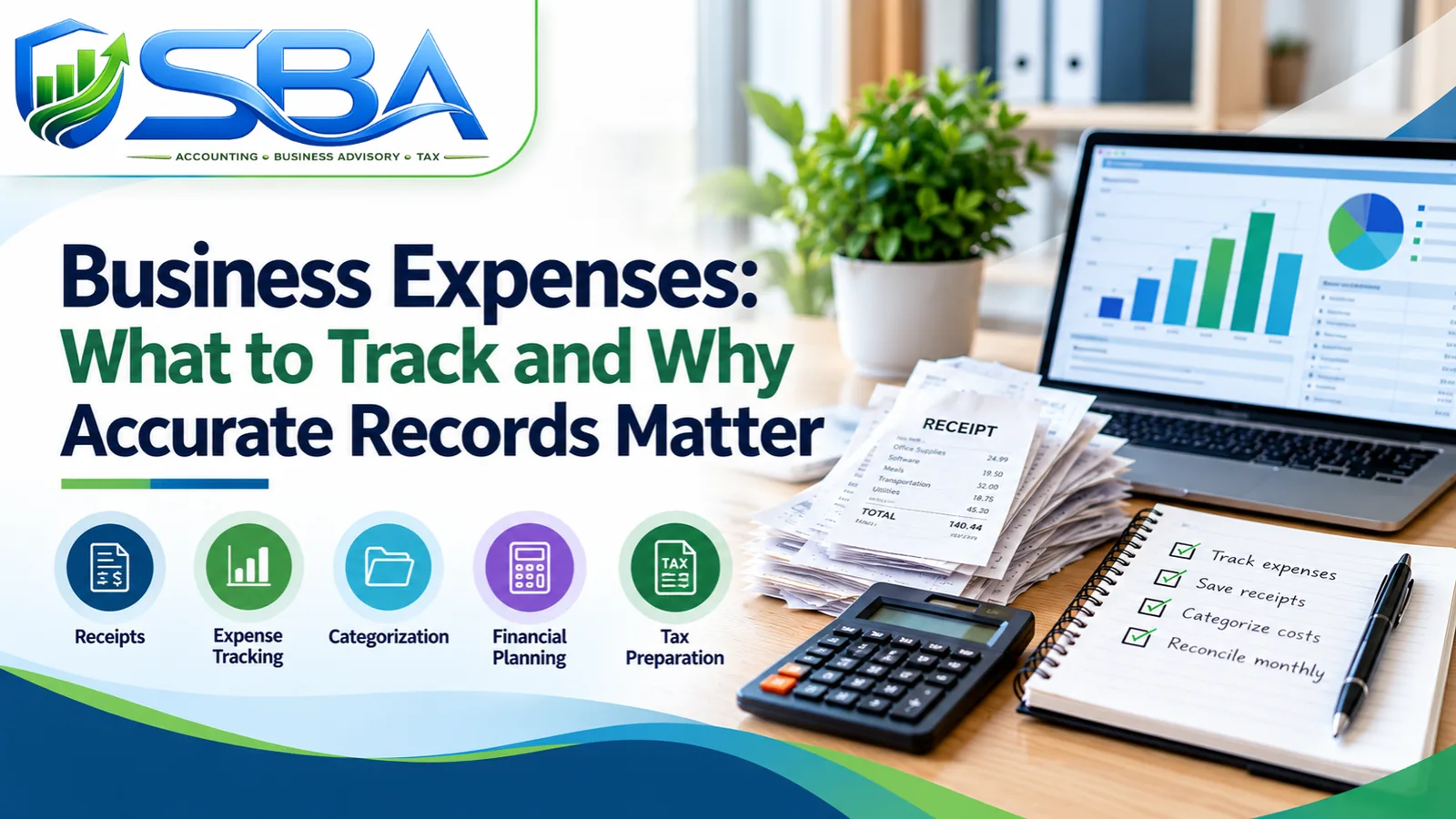
Tracking business expenses is an important part of understanding how your small business uses its money. In contrast, revenue tells you what your business brings in, while expenses show what it costs to operate.
When business expenses are recorded consistently, you can review spending, organize financial information, prepare for tax reporting, and make better-informed business decisions. However, simply keeping receipts is not enough. Additionally, your records should be organized so you can understand what each expense was for and how it fits into your overall business finances.
In this guide, you’ll learn what small business owners should track, how to organize expense records, and why accurate records matter.
What Are Business Expenses?
In general, business expenses are costs a business incurs while operating and providing its products or services.
For example, depending on the business, expenses may include:
- Office rent
- Utilities
- Advertising and marketing
- Software subscriptions
- Office supplies
- Professional services
- Payroll and employee-related costs
- Insurance
- Business travel
- Equipment and technology
- Telephone and internet services
- Vehicle-related business costs
The types of expenses you have will depend on your industry, business structure, and how your business operates. Therefore, tracking business expenses should start with understanding the costs that regularly affect your business.
Why Tracking Business Expenses Matters
Understand Where Your Money Goes
When expenses are categorized consistently, you can see where your business is spending money. For example, you may discover that software subscriptions, advertising, or other operating costs have increased over time. As a result, organized expense records can help you identify spending patterns that may deserve further review.
Monitor Business Performance
Expenses are an important part of understanding profitability. However, revenue alone does not tell you how much your business is keeping. By comparing revenue with business expenses, you can better understand the financial results of your operations.
Support Financial Planning
Accurate expense information can also support budgeting and cash-flow planning. For a deeper look at managing incoming and outgoing business cash, see our guide to Cash Flow for Small Businesses. For example, reviewing previous expenses can help you estimate recurring costs when preparing a monthly business budget. You can then compare planned spending with actual spending throughout the month.
Make Recordkeeping Easier
In addition, organized records can make it easier to locate information when you need it. Instead of searching through a large collection of receipts, emails, invoices, and bank transactions, you can maintain a consistent system for recording and categorizing expenses.
What Business Expenses Should You Track?
Although every business is different, most small businesses should maintain records for the expenses that relate to their operations. Tracking business expenses consistently can make these records easier to review and maintain.
1. Office and Workplace Expenses
Depending on your business, these may include:
- Office rent
- Utilities
- Office supplies
- Internet services
- Telephone services
- Cleaning expenses
- Workplace equipment
For this reason, keep the supporting documentation for these transactions so you can identify the date, amount, vendor, and business purpose.
2. Software and Technology
Similarly, many businesses use technology for daily operations.
- Accounting software
- Payroll software
- Customer relationship management systems
- Cloud storage
- Website hosting
- Design software
- Cybersecurity services
- Business communication tools
Therefore, reviewing these expenses regularly can help you identify services that are no longer needed, especially because subscriptions may renew monthly or annually.
3. Marketing and Advertising
For instance, marketing expenses may include:
- Online advertising
- Website services
- Printing
- Promotional materials
- Graphic design
- Social media services
- Business cards
- Marketing platforms
Similarly, keep records that show what was purchased, when it was purchased, and the amount paid.
4. Professional Services
In addition, businesses often pay outside professionals for specialized services.
- Accounting services
- Tax services
- Legal services
- Consulting
- Business advisory services
- Professional memberships
As a result, these expenses should be recorded consistently and supported by invoices, receipts, or other appropriate documentation.
5. Payroll and Employee-Related Costs
If your business has employees, payroll can represent a significant operating cost.
Depending on your circumstances, records may include:
- Wages
- Employer payroll costs
- Employee benefits
- Payroll service fees
- Other employee-related expenses
Similarly, payroll records should be maintained separately and accurately because they can involve additional reporting and compliance requirements.
6. Travel and Vehicle Expenses
For example, business travel may include transportation, lodging, parking, tolls, and other qualifying costs.
Vehicle-related expenses can require additional documentation, particularly when a vehicle is used for both business and personal purposes. Therefore, keep detailed records rather than relying only on a monthly bank or credit-card statement.
Business Expense Tracking: A Simple System
You do not necessarily need a complicated system to begin tracking business expenses. Instead, a consistent business expense tracking process can help you keep records organized over time. The key is consistency.
Step 1: Collect Your Expense Records
First, gather receipts, invoices, bills, bank statements, credit-card statements, and other supporting documents.
Step 2: Record Each Transaction
Next, record important information such as:
- Date
- Vendor
- Amount
- Expense category
- Payment method
- Business purpose
- Supporting documentation
Step 3: Categorize Expenses
Then, assign each expense to an appropriate category. For example, technology may include accounting software, website hosting, and cloud storage. Marketing may include advertising, printing, and promotional materials. Office may include supplies, rent, and utilities.
Consistent categories make your financial reports easier to understand.
Step 4: Reconcile Your Records
Afterward, compare your recorded expenses with your bank and credit-card activity. This step can help identify transactions that were missed, duplicated, or recorded incorrectly.
Step 5: Review Your Spending
Finally, review your expenses regularly. Look for changes in recurring costs, unusual transactions, and categories where spending has increased.
Organize Receipts and Expense Records
Keeping receipts is only one part of good recordkeeping. When tracking business expenses, you should also have a system for organizing receipts and other supporting records. The IRS recordkeeping guidance explains the types of supporting documents businesses should maintain and how those records support business transactions.
A simple digital organization system might look like this:
2026 Business Expenses
→ January
→ February
→ March
→ April
→ May
→ June
Within each month, you could organize documents by expense category or vendor.
For digital records, use clear filenames. For example:
2026-09-15-ABC-Software-150.pdf
This approach can make individual transactions easier to locate later.
In addition, consider maintaining your accounting records in accounting software or another consistent bookkeeping system rather than relying exclusively on folders of receipts.
Expense Categories: A Visual Overview
| Category | Examples |
|---|---|
| Office | Rent, supplies, utilities |
| Technology | Software, hosting, cloud services |
| Marketing | Advertising, printing, promotion |
| Professional Services | Accounting, legal, consulting |
| Payroll | Wages and related costs |
| Travel | Transportation, lodging, parking |
| Vehicle | Business-related vehicle costs |
| Insurance | Business insurance policies |
| Other Operating Costs | Industry-specific business expenses |
However, these categories are examples rather than a universal chart of accounts. Your bookkeeping categories should reflect your business and accounting system.
Common Business Expense Tracking Mistakes
Mixing Personal and Business Expenses
Using business accounts for personal purchases can make bookkeeping more difficult. Whenever possible, keep business and personal transactions separate.
Keeping Receipts Without Recording the Purpose
A receipt may show what you purchased, but it may not explain why the expense was incurred. Add useful notes when the business purpose is not obvious from the transaction itself.
Waiting Too Long to Record Expenses
Recording expenses months later can increase the risk of missing transactions or losing supporting documents. Instead, establish a regular bookkeeping routine.
Failing to Review Recurring Expenses
For example, monthly and annual subscriptions can continue unnoticed. Review recurring expenses periodically and confirm that each service is still needed.
Relying Only on Bank Statements
However, a bank statement can confirm that money was paid without containing all the information needed to understand the transaction. Supporting documentation and appropriate categorization remain important.
Why Accurate Expense Records Matter
Accurate records can help connect day-to-day transactions with the bigger financial picture of your business.
For example, when your expenses are properly recorded, your bookkeeping system can provide more useful information about:
- Revenue
- Operating costs
- Profit
- Cash flow
- Budget performance
- Spending patterns
Furthermore, organized records can make it easier to review financial information with your accountant or tax professional.
For a broader overview of the financial numbers business owners should regularly monitor, see 7 Financial Numbers Every Small Business Owner Should Track.
Accurate records also matter when preparing tax information. Tax rules can vary based on the type of expense, business structure, accounting method, and other facts. Therefore, business owners should not assume that every expense is automatically deductible simply because it was paid by the business.
How Bookkeeping Supports Business Expense Tracking
Bookkeeping brings individual transactions together into an organized financial record. This supports consistent tracking of business expenses and makes financial information easier to review. For businesses that need ongoing help maintaining organized financial records, SBA Bookkeeping Services provides bookkeeping support for small businesses.
A consistent bookkeeping process can help you:
- Record transactions regularly.
- Categorize expenses consistently.
- Reconcile financial accounts.
- Review financial reports.
- Identify unusual transactions.
- Monitor business spending.
- Prepare organized information for tax and financial planning.
As a result, bookkeeping is not simply about entering transactions. It helps turn financial records into information that business owners can review and use.
Business Expense Tracking Checklist
- Collect receipts and invoices.
- Record expenses regularly.
- Include the date and amount.
- Record the vendor or payee.
- Assign an appropriate category.
- Document the business purpose when needed.
- Keep supporting documentation.
- Reconcile bank and credit-card transactions.
- Review recurring expenses.
- Check for unusual or duplicate transactions.
- Review expense trends regularly.
- Keep personal and business expenses separate.
A consistent monthly review can help prevent small recordkeeping problems from becoming larger issues later.
Frequently Asked Questions About Tracking Business Expenses
How often should I record business expenses?
Ideally, record expenses regularly rather than waiting until the end of the year. The appropriate schedule depends on the volume and complexity of your business transactions.
Should I keep receipts for business expenses?
You should maintain appropriate supporting records for business transactions. The specific records you need can depend on the type of expense and applicable tax and accounting requirements.
Can I use a spreadsheet to track business expenses?
For example, a spreadsheet can be useful for a simple operation, especially when transaction volume is low. However, businesses with more transactions may benefit from dedicated accounting software and regular bookkeeping.
Should business and personal expenses be separate?
As a result, keeping business and personal transactions separate generally makes bookkeeping and financial review easier.
What should I do if I lose a receipt?
If supporting documentation is missing, first gather other available records and then document the transaction as accurately as possible. For tax-related questions, consult your tax professional about the appropriate records for your specific situation.
Consistent expense tracking helps small business owners keep financial records organized, understand spending, and prepare more useful information for financial and tax planning.
Final Thoughts on Business Expense Tracking
Tracking business expenses is about more than keeping receipts. It is about maintaining organized financial records that help you understand how your business operates.
By recording expenses consistently, categorizing transactions, keeping supporting documentation, and reviewing spending regularly, you can build a clearer picture of your business finances.
Accurate records can also make bookkeeping, financial planning, and tax preparation more organized. For additional guidance, the IRS Recordkeeping page explains how good records can help businesses monitor operations, prepare financial statements, track deductible expenses, and prepare tax returns.
If keeping up with business expenses is taking too much time, SBA Accounting and Tax Services PLLC can help you maintain organized bookkeeping records and gain a clearer view of your business finances.
Numbers Today, A Brighter Tomorrow.




4 Responses