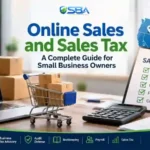
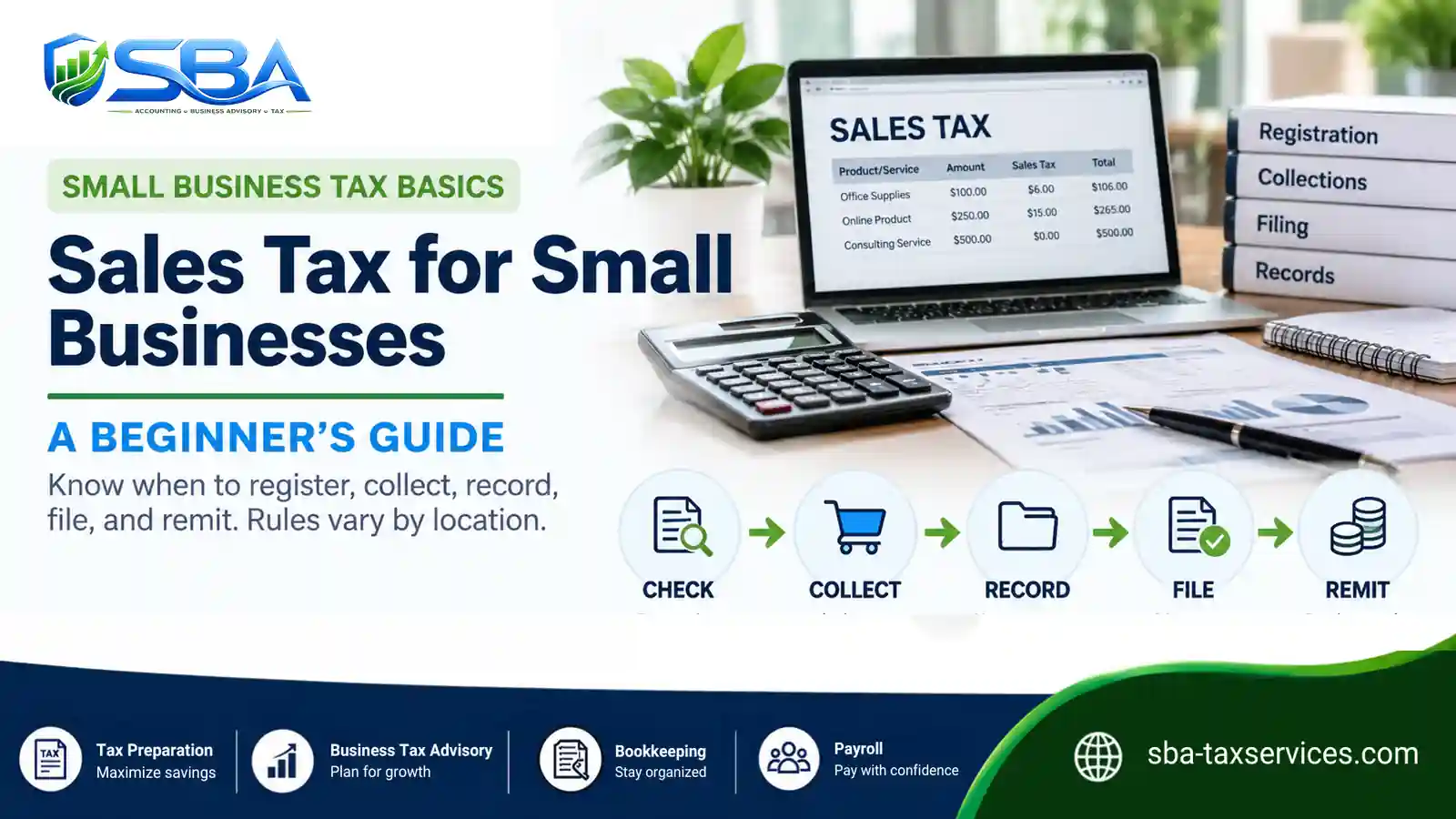
Sales tax for small businesses can seem straightforward at first: a customer buys a taxable product, the business collects the applicable tax, and the amount is sent to the appropriate tax authority. However, the real process can be more complicated. Taxability, registration requirements, rates, filing schedules, and exemptions can vary by state and locality. For that reason, understanding sales tax for small businesses is an important part of building reliable financial processes. Even a business with a small number of transactions needs to know which rules apply to its products, customers, and locations.
The good news is that a consistent process can make sales tax easier to manage. By determining where registration may be required, setting up accurate tax collection, maintaining organized records, and meeting filing deadlines, business owners can reduce confusion and improve compliance. In this guide, we explain the fundamentals of sales tax, outline the steps to manage it, and identify the records that small businesses should maintain.
In This Guide
Choose a topic to jump directly to that section.
What Is Sales Tax?
For sales tax for small businesses, the first step is understanding that sales tax is generally a consumption tax imposed by a state or local jurisdiction on certain retail sales of goods and, in some jurisdictions, particular services. The business typically collects the tax from the customer and remits it to the appropriate tax authority when required.
However, not every product or service is taxable, and not every jurisdiction applies the same rules. For example, a product may be taxable in one state but exempt in another. Similarly, certain transactions may qualify for an exemption when the buyer provides valid documentation. Sales tax is also different from income tax: income tax generally applies to taxable income, while sales tax obligations are connected to particular transactions and the applicable jurisdiction’s rules.
The U.S. Small Business Administration advises businesses to review the tax requirements that apply to their operations. Its small business tax guidance is a useful starting point. Nevertheless, the state and local tax authority remains the key source for the rules that apply to a specific transaction or account.
Does Your Small Business Need to Collect Sales Tax?
The answer depends on what you sell, where you operate, where your customers are located, and whether your business has a legal obligation to collect tax. Therefore, do not assume that every business must collect sales tax in every location—or that a small or online-only business is automatically exempt.
1. Identify where your business has a tax obligation
First, review your physical business locations, offices, inventory, employees, and other relevant activities. These connections may create a tax obligation in a state. In addition, selling online does not automatically remove sales tax responsibilities. A state may require a remote seller to collect tax when the seller meets that state’s economic nexus rules.
Economic nexus generally refers to a state-defined connection based on a seller’s economic activity, such as sales revenue or transaction volume. However, thresholds and measurement rules differ by state. Consequently, businesses selling across state lines should review the rules for each relevant jurisdiction instead of relying on a single nationwide assumption.
2. Determine whether your products or services are taxable
Next, identify the goods and services your business sells. Some jurisdictions tax most tangible personal property, while others also tax specified services, digital products, or other categories. At the same time, exemptions may apply to particular products, buyers, or transactions. For that reason, confirm the applicable rules before configuring your checkout system or issuing invoices.
3. Check whether an exemption applies
Some sales may qualify for an exemption, including certain qualifying resale transactions. Nevertheless, an exemption should not be assumed simply because a customer requests it. Instead, determine what documentation the jurisdiction requires and retain the appropriate records. This helps support the treatment used on the transaction if questions arise later.
How to Get Started With Sales Tax Registration
If your business is required to collect sales tax, registration is generally an important step in managing sales tax for small businesses before collecting tax where required. The precise process depends on the state. Therefore, use the official tax authority’s instructions rather than relying only on a third-party checklist.
- Identify the relevant jurisdiction and review its registration requirements.
- Gather your legal business name, address, identification details where applicable, and business activity information.
- Complete the official registration application through the appropriate tax authority.
- Save your confirmation, account number, certificate, and instructions with your business records.
For example, Virginia Tax provides an official business registration resource. Review its retail sales and use tax guidance for state-specific information. Businesses registering for retail sales and use tax can receive a sales tax certificate when applicable. However, Virginia’s rules are an example, not a nationwide standard. Businesses operating elsewhere should consult the relevant state tax authority.
How to Collect Sales Tax Correctly
Configure your invoicing or checkout system
First, identify the products and services that are taxable in the jurisdictions where your business has an obligation to collect tax; this is a core step in managing sales tax for small businesses. Then configure your point-of-sale, ecommerce, or invoicing system to apply the appropriate treatment. In particular, review the settings for product taxability, customer location, delivery destination, exemptions, and applicable rates. If you sell through more than one channel, check each channel separately.
Apply the correct rate and tax treatment
Sales tax rates may include state and local components. Moreover, the rate and sourcing rules can depend on the jurisdiction and transaction. Therefore, do not rely on a rate remembered from a previous sale. Instead, use the official rate lookup or an appropriate tax calculation process and review changes when they occur.
Show tax clearly on transaction records
Invoices and receipts should clearly reflect the transaction amount, tax collected where applicable, and total charged. Additionally, records should allow you to connect each sale to its supporting transaction details. This makes it easier to reconcile sales activity with payment records and tax reports later.
How to File and Remit Sales Tax
Collecting sales tax is only one part of managing sales tax for small businesses. Businesses must also follow the applicable rules for reporting and remitting the tax. Consequently, create a repeatable process that covers filing frequency, due dates, reconciliation, payment, and record retention.
Track your filing frequency and due dates
Tax authorities may assign monthly, quarterly, or other filing schedules. Therefore, confirm the filing frequency assigned to your account and record the due dates on a calendar. In addition, set reminders before each deadline. This leaves time to review the records, investigate differences, and resolve missing information.
Reconcile collected tax before filing
Before preparing a return, compare sales records, taxable sales, exempt sales, tax collected, refunds, and adjustments. Meanwhile, investigate differences between the sales system and the accounting records. A consistent reconciliation process helps identify missing transactions and incorrect tax treatment before the return is submitted.
File and pay using the required method
Follow the tax authority’s instructions for filing the return and remitting the amount due. Keep the submitted return, payment confirmation, and supporting calculations together. Importantly, some jurisdictions require a return even when no tax is due for a reporting period. Accordingly, follow the filing instructions assigned to your account rather than assuming that a quiet month means no filing is necessary.
For businesses selling into multiple states, the Streamlined Sales Tax Registration System explains registration options in participating states. Its registration FAQ provides additional context; however, each business should still confirm its obligations with the relevant state authority. However, registration through that system does not replace the need to follow each state’s filing and payment procedures.
What Sales Tax Records Should Your Business Maintain?
Accurate records are essential for sales tax for small businesses because they make it easier to prepare returns, explain tax treatment, and respond to questions. Therefore, establish a consistent method for organizing sales tax information. Depending on your business and the applicable rules, records may include:
- Sales invoices and receipts: Document the transaction, date, customer details where appropriate, and amounts charged.
- Tax collected: Track the sales tax recorded for each relevant transaction.
- Exemption documentation: Retain certificates and other supporting records where required.
- Returns and payment confirmations: Save copies of filed returns and evidence of payments.
- Refunds and adjustments: Document returns, credits, corrections, and related tax adjustments.
- Registration information: Keep account numbers, certificates, notices, and tax authority correspondence.
- Reconciliation reports: Preserve the calculations used to compare sales activity with tax returns.
In addition, retain records for the period required by the relevant tax authority. Record-retention rules vary, so confirm the applicable requirement rather than using an assumed universal period. Good recordkeeping also supports your broader accounting process. For help organizing financial transactions and reports, explore SBA’s bookkeeping services for small businesses.
Common Sales Tax Mistakes to Avoid
Even when a business has a process in place, small sales tax mistakes can become recurring problems for sales tax for small businesses. The following practices deserve particular attention.
Assuming every sale is taxable—or exempt
Taxability depends on the applicable rules. Instead of making assumptions, document how your business determines the treatment of each product or service category.
Overlooking sales in another state
Online sales can introduce additional registration and collection considerations. Consequently, monitor where your customers are located and review the relevant state rules as your business expands.
Using outdated tax rates
Rates and rules may change. Therefore, review your tax settings periodically and use current official information when checking the treatment of a transaction.
Mixing collected sales tax with operating funds
Sales tax collected from customers should be tracked separately in your accounting records. Otherwise, the business may mistake collected tax for money available to spend. A clear ledger account and regular reconciliation can help maintain that distinction.
Missing filing deadlines or keeping incomplete records
A business may collect tax correctly but still fall behind on filing or payment. To reduce that risk, maintain a deadline calendar, assign responsibility for each return, and review upcoming obligations regularly. Furthermore, a filed return is not the only record worth retaining. Supporting invoices, exemption documents, reconciliation reports, and payment confirmations help explain how the reported amounts were determined.
A Simple Monthly Sales Tax Routine
A repeatable routine can make sales tax for small businesses easier to manage and maintain. Adjust the timing to match your assigned filing frequency and business activity.
| Step | Action |
|---|---|
| 1. Review | Check sales activity, product taxability, and customer locations where relevant. |
| 2. Reconcile | Compare sales reports with tax collected and accounting records. |
| 3. Investigate | Resolve differences, missing records, refunds, and adjustments. |
| 4. Prepare | Compile the figures and documentation needed for the return. |
| 5. File and pay | Submit the return and remit tax according to official instructions. |
| 6. Archive | Save the return, payment confirmation, reports, and supporting documents. |
Finally, review the process periodically, especially after adding new products, entering another state, changing sales channels, or receiving a notice from a tax authority.
Frequently Asked Questions About Sales Tax for Small Businesses
Is every small business required to collect sales tax?
No. The obligation depends on the jurisdiction, the products or services sold, exemptions, and whether the business meets the applicable requirements to collect tax. Therefore, check the rules for your specific circumstances.
Do online businesses have to collect sales tax?
They may. A business can have sales tax responsibilities in a state where it has no physical store if it meets that state’s remote-seller or economic nexus requirements. However, thresholds and other conditions vary by state.
What is the difference between sales tax and use tax?
Sales tax is generally collected by a seller on taxable transactions when required. Use tax may apply to taxable property or transactions when sales tax was not properly collected, subject to the jurisdiction’s rules. Accordingly, businesses should review both concepts when evaluating their obligations.
How often should a small business file sales tax returns?
The filing schedule is determined by the relevant tax authority and may depend on the account and jurisdiction. Check your registration instructions and account notices for the assigned frequency and deadlines.
What happens if my business has no taxable sales during a filing period?
The answer depends on the jurisdiction and your filing requirements. Some registered businesses must still submit a return for the period, even if no tax is due. Therefore, verify the instructions for your account before skipping a filing.
Can accounting software manage sales tax automatically?
Some accounting, invoicing, and ecommerce systems can calculate or track sales tax. Nevertheless, software settings do not determine your legal obligations. You still need to confirm registration requirements, product taxability, jurisdiction rules, exemptions, filing schedules, and the accuracy of the resulting records.
Build a Reliable Sales Tax Process
Sales tax for small businesses becomes easier to manage when the business follows a clear, documented process. First, determine where you may need to register and which sales are taxable. Next, configure your collection system, reconcile the amounts recorded, and maintain the documentation needed to support your returns.
Just as importantly, review the process when your business changes. New products, additional sales channels, and customers in other states can create questions that did not exist before. Because requirements vary by jurisdiction, use official tax authority guidance to confirm the rules that apply to your business. When the requirements are unclear or involve multiple jurisdictions, seek qualified tax advice before deciding how to proceed.
Make Sales Tax Recordkeeping Easier to Manage
Keep your books organized and get practical guidance on your business tax processes. SBA Accounting and Tax Services PLLC supports small businesses with bookkeeping and business tax advisory services.
Discuss your business needs and learn about support for your accounting and tax workflow.
Explore Business Tax Advisory Services
You can also explore bookkeeping services or return to the SBA website.
This article provides general educational information and is not a substitute for advice about your specific tax obligations. Sales tax rules vary by jurisdiction and can change; confirm current requirements with the appropriate tax authority or a qualified tax professional.