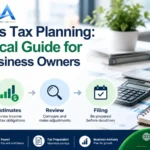
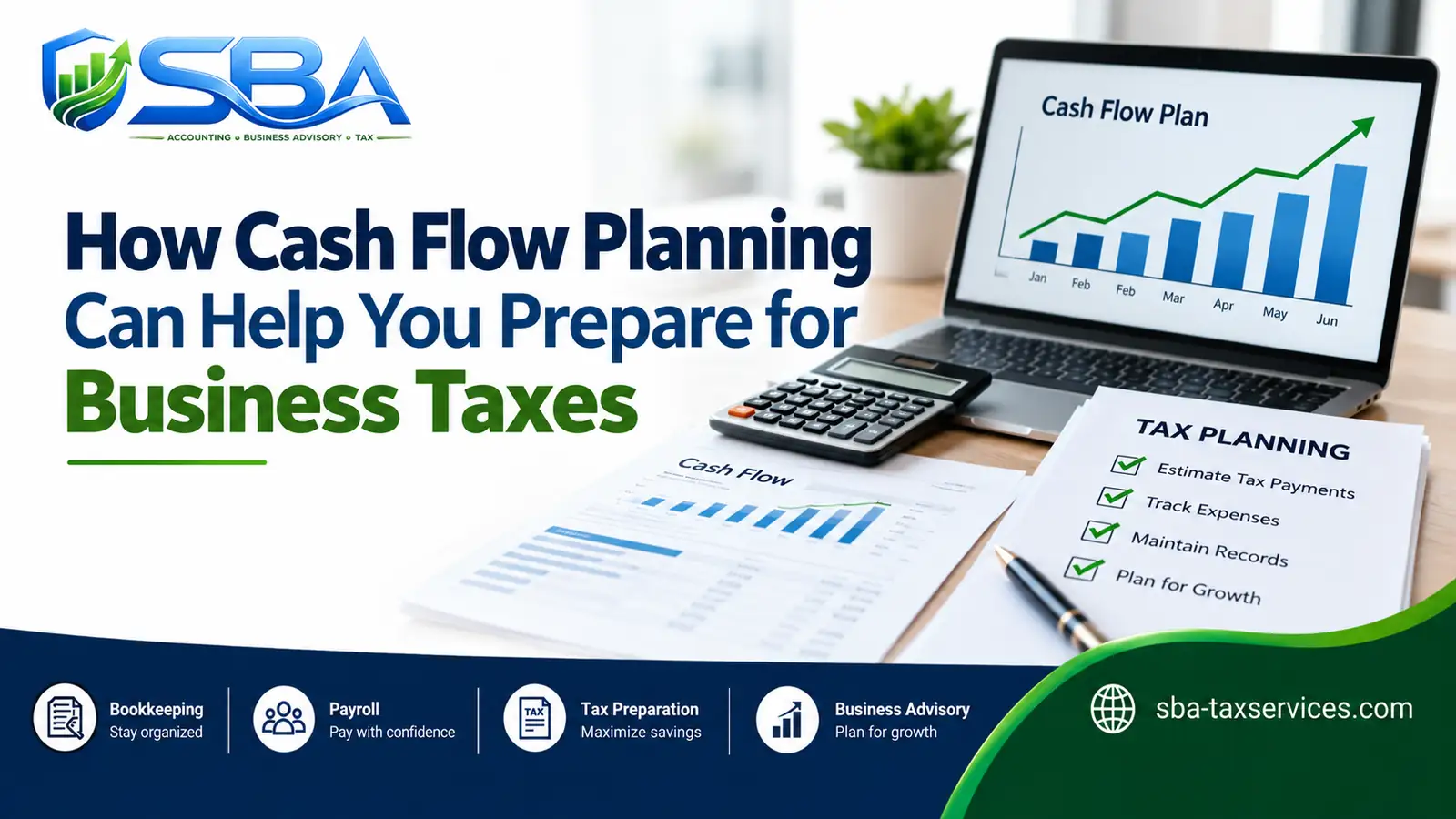
Cash flow tax planning helps you connect expected cash receipts and business payments with upcoming tax obligations. For example, even when a business makes sales, money may not arrive before payroll, supplier bills, rent, or tax payments are due. Therefore, a practical cash flow forecast can help you see potential timing gaps early and make informed decisions before a deadline approaches.
However, a forecast is a planning tool, not a tax calculation. Your tax obligations depend on your business structure, income, deductions, and other circumstances. For that reason, use current financial records alongside applicable tax guidance and professional advice.
03 Plan estimated taxes 04 Build a tax reserve
05 Improve records 06 Checklist and FAQs
Why Cash Flow Matters for Business Taxes
A business can record sales and still experience a cash shortage. Customers may pay invoices late, inventory may need to be purchased ahead of a busy period, or payroll and rent may fall due before expected receipts arrive. As a result, a profitable period does not automatically mean that enough cash is available on a particular payment date.
For additional context, the U.S. Small Business Administration encourages business owners to maintain organized financial information and understand the money moving through the business. Its business management and financial guidance is a useful starting point.
A cash flow review can help you answer important questions:
- How much cash is likely to arrive before the next tax payment?
- Which bills, payroll costs, and loan payments will be due first?
- How much cash should remain available for normal operations?
- Could a delayed customer payment create a shortfall?
- When should tax estimates be reviewed with a tax professional?
Therefore, cash flow planning is about timing as well as totals. It can help you identify pressure points early enough to investigate reasonable options.
How to Build a Cash Flow Tax Planning Forecast
Fortunately, a forecast does not have to be complicated to be useful. Start with current records, list expected cash movements, and update the forecast when actual results differ from your assumptions.
01Start With Available Cash for Your Cash Flow Forecast
First, record the opening cash balance for the accounts included in your forecast. Reconcile bank activity and identify transactions that have not yet been recorded. This gives you a more dependable starting point.
02Estimate Cash Receipts for Your Cash Flow Forecast
Next, list expected customer payments and other cash receipts using realistic collection dates, not just invoice dates. Separate payments that are reasonably expected from receipts that remain uncertain. That way, your forecast is less likely to rely on money arriving earlier than it actually does.
03List Expected Payments
Then list payroll, rent, supplier payments, debt obligations, insurance, recurring expenses, planned purchases, and known tax payments. Include due dates so you can see whether several large payments are clustered in the same period.
04Compare Forecast With Actual Results
Finally, compare your forecast with actual cash activity at regular intervals. When customer payments, expenses, or business conditions change, update your assumptions. In addition, review tax estimates with your tax professional when the underlying financial picture changes materially.
Opening cash + expected receipts − planned payments = projected ending cash
Include relevant categories for your business. This is a planning estimate, not a guarantee or a calculation of taxable income.
Importantly, a positive projected balance does not mean the entire amount is available for discretionary spending. For that reason, some cash may already be needed for upcoming obligations and operating reserves. To understand how reported income and expenses fit together, see our guide on how to read a profit and loss statement; it complements a cash forecast but does not replace one.
Cash Flow Tax Planning: Connect Forecasts to Estimated Taxes
Once you have a forecast, use it alongside your tax estimates. The IRS explains that federal income tax is generally paid as income is earned or received, through withholding, estimated payments, or a combination of the two. However, requirements depend on the taxpayer and circumstances.
For current rules, review IRS Publication 505, Tax Withholding and Estimated Tax. Do not assume every business has identical estimated payment requirements or dates. If you need help deciding how tax decisions fit into your broader financial plans, read our related guide, What Is Business Tax Advisory, and When Might You Need It?
- Confirm which rules apply. Identify the business structure and relevant tax obligations.
- Review the current estimate. Use current financial information and seek professional guidance when circumstances change.
- Add payments to the forecast. Include applicable payment dates and amounts alongside operating costs.
- Check cash availability early. If a shortfall appears likely, investigate it before the due date and discuss options with your tax professional.
- Keep payment records. Save confirmations and supporting documents for later review and tax preparation.
As a result, your forecast can help you see the timing of expected payments. It does not determine your tax liability or replace IRS instructions.
Set Aside Cash for Expected Tax Payments
In addition, a tax reserve can help prevent expected tax payments from being confused with cash available for everyday spending. However, the amount to reserve depends on your circumstances; there is no single percentage that fits every business.
To make a reserve more useful, consider the following steps:
- Base it on a current estimate that reflects relevant business information.
- Review the estimate when income, expenses, or other tax factors change.
- Track the reserve in your planning records, even if the cash remains in the same account.
- Compare the reserve with upcoming tax payments and operating needs.
- Avoid treating reserved cash as spare operating money merely because it appears in the bank balance.
At the same time, protect operating liquidity. Setting aside money without considering payroll, suppliers, rent, debt payments, and other near-term obligations can create a different cash problem. Therefore, a forecast should consider these needs together.
Use Accurate Bookkeeping to Improve Your Forecast
In practice, cash flow planning is only as useful as the information behind it. Missing transactions, unreconciled accounts, outdated invoices, and incorrectly classified expenses can make a forecast less reliable.
Consequently, maintain a regular bookkeeping routine. Record transactions promptly, follow up on outstanding invoices, review upcoming bills, and reconcile bank activity. The IRS explains the importance of supporting documents in Publication 583, Starting a Business and Keeping Records.
For a practical next step, review our guide to business bank reconciliation. You can also read Business Expenses: What to Track and Why Accurate Records Matter for a practical overview of the records that support reliable forecasts. If your records are difficult to maintain, explore SBA Bookkeeping Services to learn about bookkeeping support.
Common Cash Flow Tax Planning Mistakes
Nevertheless, even a basic forecast can become misleading if its assumptions are not reviewed. Watch for these common problems:
- Treating invoices as collected cash. An issued invoice is not the same as money received, so use realistic collection dates.
- Using the bank balance as the full spending limit. Upcoming bills and taxes may already account for much of that balance.
- Ignoring seasonal changes. Sales and expenses can vary throughout the year, so update the forecast to reflect actual patterns.
- Leaving tax estimates unchanged. Significant changes in business activity may warrant a fresh review.
- Waiting until a deadline to find a shortfall. Regular reviews provide more time to identify timing problems and seek advice.
- Keeping incomplete records. Missing or unclear transactions make it harder to understand cash movement and support tax reporting.
- Confusing profit with available cash. Timing differences between sales, collections, expenses, and payments can affect cash availability.
Ultimately, the objective is not to predict every transaction perfectly. Rather, it is to identify important obligations, make assumptions visible, and update the plan when circumstances change.
Monthly Cash Flow Tax Planning Checklist
- Reconcile bank accounts and review unusual transactions.
- Update expected customer receipts and collection dates.
- Review payroll, suppliers, rent, debt, and recurring expenses.
- List known tax payments and confirm applicable requirements.
- Compare the forecast with actual cash movement.
- Review whether tax estimates need professional reassessment.
- Consider tax reserves and operating cash needs together.
- Save supporting records and schedule the next review.
Of course, adjust this routine to your business activity and reporting needs. For example, a business with frequent transactions or tight cash margins may need to review its position more often than once a month.
Frequently Asked Questions
What is cash flow tax planning?
Cash flow tax planning means considering expected cash receipts, business payments, and tax obligations together. It helps business owners plan for the timing of expected payments while maintaining enough cash for normal operations.
Does a profitable business always have enough cash to pay taxes?
No. Profit and cash availability are different measures. Customer payments may arrive after bills are due, while other operating expenses can reduce the cash available at a particular time. A forecast helps reveal these timing differences.
How often should I update my cash flow forecast?
For many small businesses, a monthly review is a useful starting point. However, update it sooner when revenue changes significantly, a major expense arises, a customer payment is delayed, or a tax estimate needs review.
How much should my business set aside for taxes?
In particular, the appropriate amount depends on business structure, income, deductions, other tax circumstances, and applicable rules. Use a current estimate and consult a qualified tax professional instead of relying on a universal percentage.
Does cash flow planning replace estimated tax calculations?
No. Cash flow planning helps you understand when funds may be available. It does not determine your tax liability or replace applicable IRS instructions, payment rules, or professional tax advice.
What records help make a cash flow forecast more reliable?
For example, useful records can include bank statements, reconciled accounting records, customer invoices, payment history, supplier bills, payroll information, debt schedules, and tax payment records. Keep supporting documents organized and update the forecast using current information.
Prepare for Business Taxes Throughout the Year
Overall, cash flow tax planning works best as an ongoing process, not a task reserved for tax season. By reviewing cash receipts, expected expenses, tax obligations, and supporting records regularly, you can identify potential shortages earlier and make better-informed decisions.
Cash flow planning also supports a smoother tax-filing process. When you need help preparing and filing returns, learn more about our Tax Preparation Services for individuals and businesses.
If you need help connecting your bookkeeping with year-round tax planning, explore SBA Business Tax Advisory Services. SBA Accounting and Tax Services PLLC can help you review your needs and determine what type of bookkeeping or tax advisory support may be appropriate.
Make cash flow reviews part of your regular financial routine, keep records organized, and revisit tax assumptions when business conditions change.
General information only. This article does not replace individualized tax advice. Tax rules and payment requirements depend on your circumstances; confirm current requirements with the IRS and a qualified tax professional.