
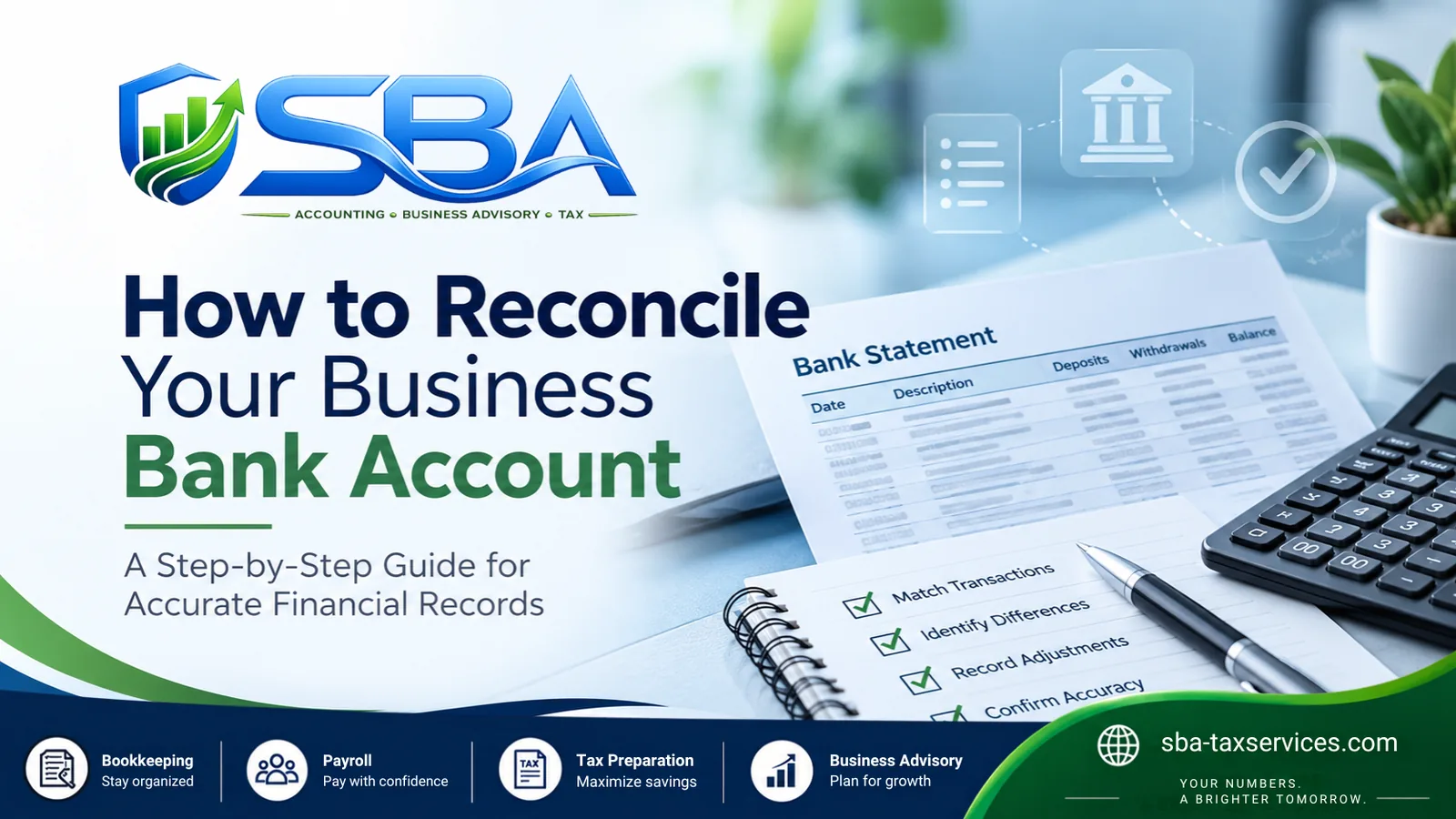
Business bank reconciliation is one of those bookkeeping tasks that can feel routine until a transaction does not match. A payment may have cleared, but your books may not include it yet. A fee may appear on the bank statement that is missing from the books. Or you may have entered a transaction twice.
That is why business bank reconciliation matters. It gives you a structured way to compare your bookkeeping records with the activity reported by your bank and investigate differences before they create larger reporting problems.
For small businesses, the goal is not to make reconciliation complicated. The goal is to make it consistent, understandable, and useful.
- What Is Business Bank Reconciliation?
- Why Business Bank Reconciliation Matters
- What You Need Before Starting a Business Bank Reconciliation
- How to Complete a Business Bank Reconciliation Step by Step
- Common Business Bank Reconciliation Problems
- How Business Bank Reconciliation Supports Better Bookkeeping
- A Simple Monthly Business Bank Reconciliation Checklist
- FAQs About Business Bank Reconciliation
- Final Thoughts: Make Reconciliation a Routine
What Is Business Bank Reconciliation?
Business bank reconciliation is the process of comparing the transactions and balance in your accounting records with the corresponding bank statement for the same account and period.
The purpose is not simply to make two numbers match. A reconciliation helps you identify differences that need attention, such as missing transactions, duplicate entries, bank fees, deposits or payments that have not cleared, and recording errors.
The U.S. Small Business Administration includes bank reconciliation among the financial functions a business may need to manage as part of its accounting process. SBA guidance on managing your business finances also emphasizes maintaining proper bookkeeping and understanding basic business finances.
Why Business Bank Reconciliation Matters
Accurate bookkeeping depends on complete and reliable transaction records. The IRS explains that business transactions generate supporting documents and that those records provide information used in the business books. IRS recordkeeping guidance also explains that good records can help businesses monitor progress, prepare financial statements, track expenses, and support information reported on tax returns.
Regular business bank reconciliation supports that broader recordkeeping process in several ways.
- It can help identify missing transactions. A bank statement may show a payment, deposit, or fee that you have not yet entered in the books.
- It can help detect duplicate entries. A transaction accidentally recorded twice can distort balances and reports.
- It can help identify recording errors. You may have entered the amount, date, account, or transaction type incorrectly.
- It can improve confidence in financial reports. Financial reports depend on the underlying accounting records being complete and organized.
- It can support timely review. Problems are generally easier to investigate when the transaction details are still easy to identify.
In other words, reconciliation is not just a bookkeeping formality. It is a quality-control step within your financial recordkeeping process.
What You Need Before Starting a Business Bank Reconciliation
You do not need a complicated system to begin business bank reconciliation. Gather the information for the same account and period so that you are comparing like with like.
- The bank statement for the period being reviewed
- Your bookkeeping or accounting records for the same account and period
- Details of outstanding checks or payments, if applicable
- Details of deposits or transfers that may not have cleared
- Receipts, invoices, payment confirmations, and other supporting documents for transactions that need investigation
The IRS notes that supporting documents can include invoices, receipts, deposit slips, canceled checks, account statements, and other records related to purchases, sales, payroll, and expenses. Keeping those records organized can make reconciliation questions easier to resolve.
How to Complete a Business Bank Reconciliation Step by Step
Step 1: Choose the Bank Statement Period
Start with one completed statement period. The IRS recommends reconciling a business checking account each month. A consistent monthly routine also gives you a defined period to review.
Make sure the bank statement and bookkeeping records cover the same period. If you are comparing different dates, legitimate timing differences can look like bookkeeping errors.
Step 2: Compare the Beginning Balance
Check that the beginning balance in your bookkeeping records corresponds with the starting point you are using for the business bank reconciliation.
If the beginning balance does not make sense, pause before moving forward. A prior reconciliation may contain an unresolved difference, or someone may have changed an earlier transaction.
Step 3: Match Deposits and Other Money Coming In
Compare deposits shown on the bank statement with deposits recorded in your books. Look for differences in amount, date, or description.
A deposit recorded in your books but not yet shown on the bank statement may be a timing difference, such as a deposit made after the statement date. However, investigate a transaction with no clear explanation rather than adjusting it automatically.
Step 4: Match Payments and Other Money Going Out
Next, compare checks, electronic payments, card transactions, transfers, and other withdrawals.
Pay attention to transactions that appear on the bank statement but are missing from your books. These may include bank fees, automatic payments, interest, or other activity that you did not enter when it occurred. Also note payments recorded in your books that have not yet cleared the bank; those can be normal timing differences.
Step 5: Investigate Unmatched Transactions
Do not assume every difference is an error. Some differences are caused by timing.
For example, you may record a payment in your books before it clears the bank, while you may record a deposit internally before the bank processes it. Distinguish these timing differences from actual bookkeeping errors.
For each unmatched item, ask:
- Was the transaction recorded in the books?
- Does the amount match?
- Does the date make sense?
- Has the transaction cleared the bank?
- Is there supporting documentation?
- Could the transaction have been recorded twice?
Step 6: Record Legitimate Adjustments
After investigating the differences, record legitimate items that belong in the bookkeeping records. Depending on the situation, this could include a bank fee, an interest amount, a missing transaction, or a correction to a recording error.
Your supporting documentation should explain why you made the adjustment. Avoid creating an unexplained adjustment simply to force the ending balances to agree.
Step 7: Confirm the Ending Balance
Once you investigate the differences and record the appropriate entries, review the ending balance and confirm that you completed the reconciliation.
If the numbers still do not agree, continue investigating rather than assuming the remaining difference is unimportant.
Common Business Bank Reconciliation Problems
Business bank reconciliation can uncover several recurring issues that small businesses should know how to investigate.
Missing Bank Fees
Monthly service charges, transaction fees, wire fees, or other bank charges may appear on the statement even though you have not entered them in the books. If a fee is a business transaction, make sure it is recorded appropriately based on the business’s accounting records and circumstances.
Duplicate Transactions
Accounting software can sometimes import a transaction automatically while you also enter it manually, creating two entries for one real-world transaction. Compare descriptions, amounts, dates, and supporting records before deciding that two similar entries are separate transactions.
Outstanding Payments
A payment recorded in the books may not appear on the bank statement yet because it has not cleared. Keep track of these timing differences so they are not mistaken for missing transactions.
Unrecorded Deposits
A deposit you recorded in the books may appear on a later bank statement. Review the date and supporting documentation before changing the entry.
Incorrect Transaction Amounts
You may have entered a transaction with the wrong amount. When you find a mismatch, compare the bookkeeping entry with the bank statement and the original supporting document.
Unexplained Transactions
An unfamiliar transaction should not simply be categorized based on guesswork. Review the bank description, supporting documentation, and business records so the transaction can be classified appropriately.
How Business Bank Reconciliation Supports Better Bookkeeping
Business bank reconciliation works best as part of a broader bookkeeping routine rather than as a once-a-year cleanup project.
If you are building that routine, our Small Business Bookkeeping guide explains the basic bookkeeping process and why consistent records matter.
You can also connect reconciliation to your broader financial review. Our guide to how to read a profit and loss statement explains how to understand revenue, expenses, and net profit when reviewing business performance.
Similarly, accurate expense records matter when you are reviewing bank activity. Our guide on tracking business expenses covers the supporting information and review process that can help keep expense records organized.
And because cash movement matters alongside profitability, our cash flow guide explains how money moving into and out of a business can differ from revenue and profit.
A Simple Monthly Business Bank Reconciliation Checklist
- Obtain the bank statement for the period.
- Confirm the account and statement dates.
- Compare the beginning balance.
- Match deposits and other inflows.
- Match payments and other outflows.
- Identify outstanding transactions.
- Check for duplicate entries.
- Review bank fees and other bank-originated transactions.
- Investigate unexplained differences.
- Review supporting documents.
- Record legitimate adjustments.
- Confirm the ending balance.
- Save the reconciliation support with the related records.
FAQs About Business Bank Reconciliation
What is the purpose of a business bank reconciliation?
The purpose is to compare bookkeeping records with bank activity and investigate differences. This can help identify missing transactions, duplicate entries, timing differences, and recording errors.
How often should a small business reconcile its bank account?
The IRS recommends reconciling a business checking account each month. Businesses with different transaction volumes or operating needs may choose to review activity more frequently, but the key is to maintain a consistent process.
What should I do if the bank balance does not match my books?
First, identify whether the difference is a normal timing difference or an item that needs correction. Compare transactions, amounts, dates, and supporting documents. Then record appropriate corrections or adjustments and continue investigating any unexplained difference.
Can accounting software reconcile a bank account automatically?
Accounting software may help import or match bank transactions, but automation does not eliminate the need for review. Imported transactions can still be duplicated, miscategorized, or missing supporting information. The business owner or accounting professional should review the reconciliation process and exceptions.
What records should I keep for reconciliation?
Keep the bank statements and the supporting records that explain business transactions, such as invoices, receipts, deposit information, payment records, and other relevant documentation. The IRS provides detailed guidance on recording business transactions and maintaining supporting records.
Final Thoughts: Make Reconciliation a Routine
Business bank reconciliation does not need to be complicated. A consistent process can help you compare your books with actual bank activity, investigate differences, and keep your financial records more reliable.
Most importantly, do not treat reconciliation as a task that only matters when tax filing approaches. Regular review gives you a better opportunity to identify missing information, recording errors, and unexplained transactions while the details are still accessible.
If your bookkeeping process has become difficult to keep up with, SBA Accounting and Tax Services PLLC can help small businesses organize their bookkeeping and financial records.
Need help keeping your books organized? Contact SBA Accounting and Tax Services PLLC to discuss bookkeeping, accounting, payroll, sales tax, tax preparation, and business advisory services.





3 Responses