
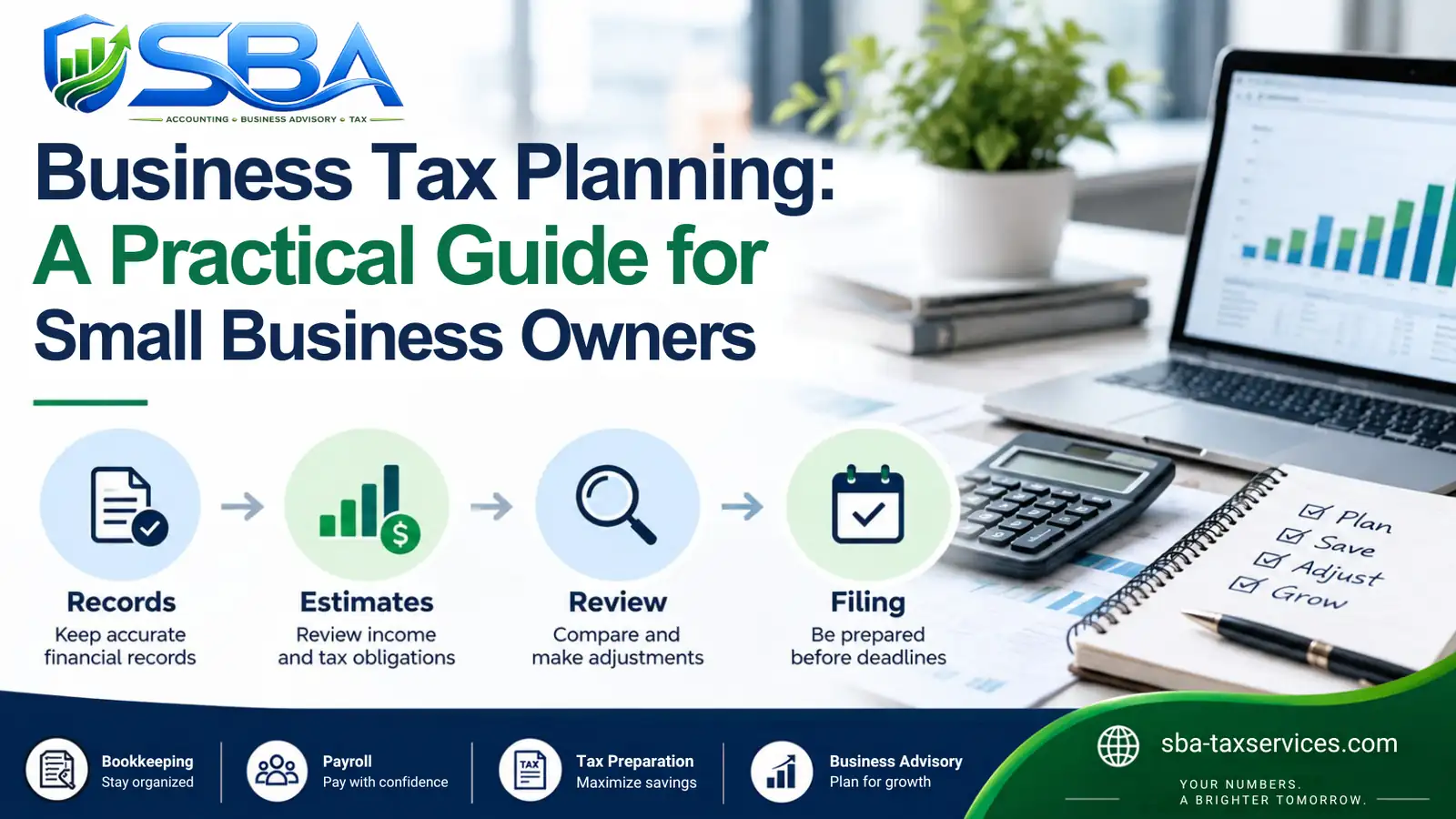
Business tax planning is not something that has to wait until tax season. Instead, it is a year-round process of keeping records organized, reviewing tax obligations, watching business changes, and preparing before deadlines arrive.
For a small business owner, that approach can make tax responsibilities easier to manage. It can also make financial information more useful throughout the year. However, the right process depends on the business structure, activities, employees, income, expenses, and applicable tax requirements.
- What business tax planning means
- Why business tax planning should be year-round
- Starting with accurate records
- Understanding which business taxes may apply
- Reviewing income and expenses
- Planning for estimated taxes
- Connecting taxes with cash flow
- Reviewing business changes
- Preparing before tax filing season
- Using financial reports
- Building a practical business tax planning routine
- Common business tax planning mistakes
- Business tax planning checklist
- Frequently Asked Questions
1. What Is Business Tax Planning?
Business tax planning is the process of reviewing your business finances and tax responsibilities throughout the year so you can make informed decisions before tax deadlines arrive.
It is broader than preparing a tax return. Tax preparation generally focuses on reporting what happened during a tax year. By contrast, tax planning looks ahead as well as back.
For example, planning may involve reviewing records, estimating potential tax obligations, considering changes in the business, and making sure you have the information needed for your tax professional.
The IRS explains that the type of business you operate affects which taxes and payment requirements may apply. Therefore, business owners should understand their own structure and obligations rather than rely on a one-size-fits-all approach.
2. Why Business Tax Planning Should Be Year-Round
Waiting until tax season can turn routine financial work into a compressed cleanup project. Instead, regular reviews allow you to identify missing information while transactions and decisions are still relatively recent.
Moreover, federal income taxes are generally paid as income is earned rather than only when a return is filed. The IRS describes this as a pay-as-you-go system and provides guidance on estimated tax payments.
As a result, a year-round process can help you monitor whether your records and tax estimates still reflect the business.
A Simple Year-Round Tax Planning Cycle
Record: Keep business income, expenses, supporting documents, and other financial information organized.
Estimate: Review expected income and applicable tax obligations.
Review: Compare current financial information with earlier expectations.
Adjust: Revisit your estimates and planning when business conditions change.
Prepare: Organize the records and information needed for tax filing before deadlines arrive.
3. Start Business Tax Planning With Accurate Records
Accurate records are the foundation of practical tax planning. If your books are incomplete, your planning starts with incomplete information.
The IRS states that good records can help a business monitor progress, prepare financial statements, identify income, keep track of deductible expenses, prepare tax returns, and support items reported on returns.
Therefore, bookkeeping should not be treated as a task that matters only when a tax return is due.
A useful starting point is to maintain organized records for income, expenses, bank activity, credit-card activity, payroll, asset purchases, loans, and other transactions that affect the business.
For a closer look at the underlying process, review our guide to business expenses and accurate records.
4. Understand Which Business Taxes May Apply
Not every business has the same tax responsibilities. Your business structure and activities can affect which federal, state, and local requirements apply.
For example, federal obligations can include income tax, estimated tax, employment taxes, and other taxes depending on the business and its activities.
Likewise, state and local requirements may apply based on where the business operates and what it sells or does.
Business Tax Planning Starts With the Right Questions
- What is my business structure?
- Which federal taxes apply to my business?
- Do I have employees or other payroll responsibilities?
- Could estimated tax payments apply to me?
- Do state or local tax obligations apply?
- Have my business activities changed during the year?
The IRS provides current guidance on filing and paying business taxes. However, because tax obligations can vary, use the applicable IRS and state guidance for your circumstances and consult a qualified tax professional when needed.
5. Review Income and Expenses Regularly
Regular review gives you a clearer picture of how the business is performing and whether your tax expectations still make sense.
For example, compare current income and expenses with earlier periods. Then, investigate significant changes rather than assuming they will resolve themselves.
In addition, review unusual expenses, large purchases, new revenue streams, and transactions that may need clarification.
This does not mean every financial change creates a tax issue. Instead, it creates an opportunity to identify questions early.
6. Plan for Estimated Taxes
Estimated taxes deserve attention because some businesses and business owners may need to make payments during the year.
The IRS notes that individuals such as sole proprietors, partners, and S corporation shareholders generally may need estimated tax payments when they expect to owe $1,000 or more when filing. Corporations generally may need estimated payments when they expect to owe $500 or more. These are general federal rules, so the actual calculation depends on the taxpayer’s circumstances.
Furthermore, the IRS provides four payment periods for estimated taxes and explains that estimates can be recalculated as circumstances change.
When Should You Revisit Your Estimate?
Revisit your estimate when income changes materially, expenses change, business activity changes, or other circumstances could affect the expected tax liability.
For current federal guidance, review the IRS estimated taxes page before making decisions about your own payment obligations.
Importantly, an estimate is not a guarantee of the final tax liability. It is a planning tool that should be updated when the underlying financial picture changes.
7. Connect Business Tax Planning With Cash Flow
Tax planning and cash-flow planning are closely connected because a tax obligation can affect the amount of cash available to operate the business.
Therefore, tax planning should not happen in isolation from the rest of your financial review.
For example, consider expected tax payments alongside payroll, vendor obligations, loan payments, equipment purchases, and other upcoming cash needs.
Our small business cash-flow guide provides additional context on monitoring money coming into and going out of a business.
A Practical Tax-and-Cash-Flow Review
Start with your latest reliable financial information. Next, identify expected tax payments and other known obligations. Then, compare those obligations with expected cash availability.
As a result, you can spot potential pressure earlier and decide whether you need to adjust spending, timing, reserves, or other business plans.
8. Review Business Changes During the Year
Business tax planning should change when the business changes.
For instance, hiring employees, adding a location, purchasing significant equipment, taking on debt, changing ownership, adding a new revenue stream, or changing the way the business operates can create new questions.
Similarly, a change in business structure can have important tax consequences and should not be made solely because of a general tax-saving idea.
The SBA notes that business structure and location can influence taxes and other obligations. Therefore, significant structural decisions deserve careful review before they are implemented.
9. Prepare for Tax-Filing Season Before It Arrives
Tax preparation becomes easier when the records needed for filing have been organized throughout the year.
Instead of reconstructing months of activity, you can focus on reviewing the information and resolving outstanding questions.
Moreover, the IRS recommends maintaining supporting documents that substantiate income, expenses, and other items reported on tax returns.
Your Tax-Ready File May Include
- Current bookkeeping records
- Bank and credit-card statements
- Income documentation
- Expense documentation and receipts
- Payroll and employment-tax records, when applicable
- Asset and equipment purchase records
- Loan and financing information
- Prior-year tax returns and relevant tax documents
The exact documents needed will depend on the business and tax return. Consequently, your tax professional may request additional information.
10. Use Financial Reports in Your Business Tax Planning
Financial reports can help turn bookkeeping data into information that is easier to review.
For example, an income statement can help you review revenue and expenses over a period. A balance sheet can help you understand assets, liabilities, and equity. Cash-flow information can help you evaluate liquidity and upcoming obligations.
Furthermore, regular reports can make unusual changes easier to spot.
Our guide to small business financial reports explains several common reports and how owners can use them.
What Should You Review?
- Revenue trends
- Major expense categories
- Profitability
- Cash position
- Outstanding receivables and payables
- Large or unusual transactions
These reviews are not substitutes for professional tax advice. Instead, they help you maintain a better understanding of the financial information that supports tax planning and business decisions.
11. Build a Practical Business Tax Planning Routine
A routine is easier to maintain when the work is divided into manageable review points.
Monthly
Keep bookkeeping current, reconcile accounts, review major income and expense changes, and identify missing documentation.
Quarterly
Review year-to-date financial performance, revisit tax estimates when appropriate, and look for business changes that could affect tax obligations.
Before Year-End
Review expected income and expenses, significant purchases, changes in operations, and information your tax professional may need.
Before Tax Filing
Confirm that bookkeeping is complete, supporting records are organized, outstanding questions are identified, and requested documents are available.
A practical monthly bookkeeping checklist can help make the recurring work easier to manage.
12. Common Business Tax Planning Mistakes
Waiting Until Tax Season
Waiting can leave too little time to correct incomplete records or investigate unusual transactions. Instead, use regular reviews to surface issues earlier.
Relying on Incomplete Bookkeeping
Planning from incomplete records can lead to poor estimates and missed questions. Therefore, keep the underlying financial information current.
Ignoring Estimated Tax Obligations
Some taxpayers may need payments during the year. As a result, ignoring estimated tax requirements can create avoidable payment problems or penalties.
Mixing Personal and Business Activity
Mixed activity can make records harder to interpret and may complicate the process of identifying business transactions.
Forgetting About Business Changes
New employees, locations, financing, equipment, ownership changes, or new activities can affect the financial and tax picture. Consequently, major changes deserve a planning review.
Treating Tax Planning as Only Tax Reduction
Tax planning is not simply about trying to reduce a tax bill. Instead, it is about understanding obligations, maintaining records, managing cash flow, and making informed decisions within the applicable rules.
13. Business Tax Planning Checklist
Use this checklist as a practical starting point:
- Keep bookkeeping current.
- Reconcile business bank and credit-card accounts regularly.
- Organize supporting records.
- Review income and expenses throughout the year.
- Understand which federal, state, and local taxes may apply.
- Review estimated tax obligations when applicable.
- Monitor major business changes.
- Connect tax planning with cash-flow planning.
- Review financial reports regularly.
- Prepare tax-filing records before the deadline approaches.
- Ask your tax professional about questions or changes that could affect your situation.
Frequently Asked Questions
What is business tax planning?
Business tax planning is the year-round process of reviewing financial records, tax obligations, expected income, expenses, and business changes so you can prepare for tax responsibilities and make informed decisions.
When should a small business start business tax planning?
Business tax planning should begin as part of the normal financial management process rather than waiting until tax season. Regular reviews throughout the year can help identify missing records and changing tax considerations earlier.
Does every small business have to make estimated tax payments?
No. Estimated tax requirements depend on the taxpayer and circumstances. The IRS provides thresholds and rules for individuals and corporations, so review current guidance or consult a qualified tax professional for your situation.
Can bookkeeping support business tax planning?
Yes. Accurate, current bookkeeping provides the financial information needed to review income, expenses, cash flow, and other items that may affect tax planning.
Should I change my business structure for tax reasons?
A business structure should not be changed based on a general tax-saving assumption alone. Structure can affect taxes, administration, legal considerations, and other obligations, so significant changes should be evaluated with qualified professional advice.
What records should a small business keep for taxes?
Businesses should maintain records that support income, expenses, and items reported on tax returns. The IRS explains that recordkeeping requirements can vary based on the action involved and applicable rules.
Is business tax planning the same as tax preparation?
No. Tax preparation generally focuses on completing and filing a return for a tax period, while business tax planning looks ahead as well as back to help manage obligations and decisions throughout the year.
Final Thoughts
Business tax planning works best when it becomes part of the normal rhythm of running the business.
Rather than waiting for tax season, keep records current, review financial information regularly, monitor estimated tax obligations when applicable, and revisit the plan when the business changes.
Ultimately, the goal is not to predict every tax outcome perfectly. The goal is to maintain reliable information and create enough time to make informed decisions before deadlines arrive.
Need Year-Round Tax and Bookkeeping Support?
SBA Accounting and Tax Services PLLC helps small businesses keep financial information organized and support year-round accounting and tax needs.
This article provides general educational information and is not a substitute for individualized tax advice. Tax rules can vary by business structure and circumstances. Consult the IRS, applicable state or local tax authorities, and a qualified tax professional for guidance specific to your situation.



4 Responses