
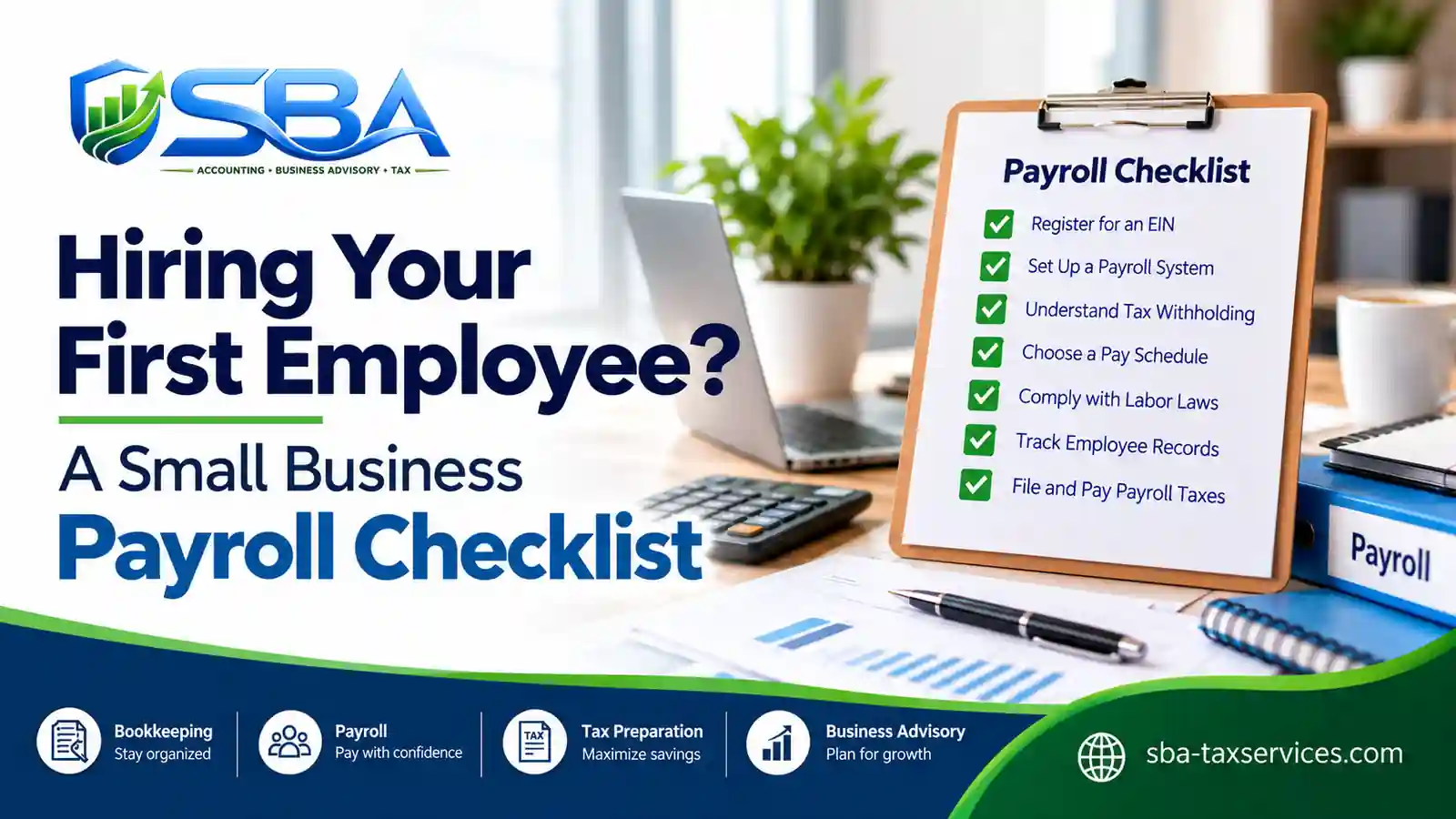
Hiring your first employee is an exciting milestone. However, becoming an employer also means taking responsibility for payroll, employee documentation, tax withholding, and wage records. Therefore, preparing before the employee’s first payday can help you establish a reliable process from the beginning. This first employee payroll checklist walks you through the essential steps, from determining worker classification to organizing your first payroll run. Although requirements vary by business and jurisdiction, a clear onboarding process helps you identify what must be completed, what needs to be verified, and what should be maintained over time.
In This Guide
Key Takeaway
Before paying your first employee, confirm the worker’s classification, complete applicable hiring documentation, establish payroll tax procedures, verify wage and pay-frequency requirements, and create a secure recordkeeping system. In addition, check the federal, state, and local rules that apply to your business.
1. Confirm Worker Classification
First, determine whether the person should be treated as an employee or an independent contractor. The distinction affects tax withholding, reporting, and other employer responsibilities. The label in a contract or the way a worker is paid does not, by itself, settle the question; the actual working relationship matters.
Review the IRS guidance on employee versus independent-contractor classification. If the facts remain unclear, seek qualified tax or legal advice; the IRS also provides a process for requesting a determination.
- Review the actual level of control over how work is performed.
- Document the basis for your classification decision.
- Get professional guidance before processing payments if you are uncertain.
2. First Employee Payroll Checklist: Prepare Employer Registration and Payroll Setup
Next, confirm that your business has the employer registrations it needs. An Employer Identification Number (EIN) is generally used for federal employment tax reporting. In addition, check whether your state or locality requires separate employer accounts, unemployment insurance registration, or other tax registrations.
As part of your first employee payroll checklist, decide how payroll will be run. You can manage it internally or use a payroll provider, but you should clearly assign responsibility for calculating pay, depositing taxes, filing returns, issuing year-end forms, and keeping records. SBA’s payroll services page explains how payroll support may fit into your process.
- Confirm your EIN and applicable employer registrations.
- Choose a payroll process and identify who owns each deadline.
- Set up secure access to payroll and tax accounts.
3. Collect Required Employee Forms
Before the first payday, collect and complete the documents that apply to the employee and your business. For many U.S. hires, this includes Form I-9 for employment eligibility verification and Form W-4 for federal income tax withholding. Also, state withholding forms, new-hire reporting, and other documents may apply.
Use the IRS’s Hiring Employees guidance as a starting point, and confirm the current instructions and deadlines for each required form. Keep sensitive employee information secure and limit access to people who need it for their work.
- Complete Form I-9 within the required timeframe and follow its document-review rules.
- Obtain Form W-4 and applicable state withholding forms.
- Collect payment details through a secure process if using direct deposit.
- Check whether state new-hire reporting or additional notices are required.
4. First Employee Payroll Checklist: Set Up Wages, Withholding, and Deductions
After the paperwork is underway, configure the employee’s pay rate, pay basis, timekeeping method, and applicable deductions. Include these setup checks in your first employee payroll checklist so key payroll details are reviewed before the first run. Also verify federal, state, and local wage rules, including minimum wage, overtime eligibility, and required pay statements. Requirements can depend on the job, location, and employer. Therefore, verify the rules before you finalize the payroll setup.
Employers generally need procedures for federal income tax withholding, Social Security and Medicare taxes, and applicable federal unemployment tax. State and local obligations may apply as well. Because payroll decisions can affect your broader tax responsibilities, consider reviewing our business tax advisory guide as part of your year-round tax planning. The IRS explains these responsibilities in its employment taxes guidance; the U.S. Department of Labor also provides compliance assistance for small businesses.
- Enter the agreed wage or salary and the correct pay basis.
- Establish a reliable method for recording and approving hours where applicable.
- Configure tax withholding and authorized deductions correctly.
- Review current federal, state, and local requirements before running payroll.
5. Establish a Payroll Schedule
A consistent payroll calendar makes it easier to pay employees on time and meet filing and deposit obligations. Before choosing a pay frequency, check the rules that apply in your state and locality. Then, work backward from payday to set deadlines for timesheets, approvals, payroll review, funding, and payment processing.
- Choose a compliant pay frequency and confirm the first payday.
- Set timesheet and manager-approval cutoffs.
- Add payroll tax deposits, filing dates, and year-end tasks to your calendar.
- Reserve enough cash to cover net pay, employer taxes, and other payroll costs.
In addition, assign a backup person or process for handling payroll if the primary person is unavailable. That small step can help prevent missed approvals or late processing.
6. First Employee Payroll Checklist: Build a Dependable Recordkeeping Process
Good records support payroll accuracy and help you respond to questions, reconcile payments, and prepare tax filings. A complete first employee payroll checklist should include a secure recordkeeping process from the start. Keep employee information, time and wage records, payroll calculations, tax filings, and payment confirmations organized according to applicable retention requirements. Because requirements vary, confirm which records you must retain and for how long. Furthermore, review your process periodically so that records remain complete and accessible.
Use secure storage, limit access to sensitive records, and reconcile payroll transactions with your business accounts. SBA’s bookkeeping services page provides more information about support for maintaining organized financial records. For a broader approach to organizing business costs, see our guide on business expenses and accurate records.
- Create a consistent digital or paper filing structure.
- Restrict access to confidential employee and tax information.
- Retain payroll reports, tax filings, and payment records for the required period.
- Reconcile payroll costs and tax payments with your accounting records.
7. First Employee Payroll Checklist: Review Payroll Before the First Payday
Before you release the first payment, review the setup from beginning to end. Use your first employee payroll checklist as a final control to confirm that each required step has an owner and has been completed. Check the employee’s details, pay rate, hours or salary, withholding elections, deductions, and payment method. Confirm that the business has enough funds and that the person responsible understands upcoming tax deposits and filings.
- Verify employee and payment details.
- Review hours, rate, gross pay, withholding, and deductions.
- Confirm the net payment and available funds.
- Check who will submit tax deposits and required filings.
- Save the payroll register and supporting records.
Finally, review the first completed payroll soon after payday. Correct any errors promptly, document adjustments, and update the process if the first run reveals a gap. As a result, the next payroll cycle can be more consistent and easier to review.
First Employee Payroll Checklist: Quick Review
- Confirm employee classification.
- Verify EIN and applicable employer registrations.
- Complete required hiring forms and reporting.
- Configure wages, timekeeping, withholding, and deductions.
- Confirm a compliant pay frequency and first payday.
- Set up secure records and retention procedures.
- Assign payroll, tax, and filing responsibilities.
- Review the first payroll before releasing payment.
First Employee Payroll Checklist: Frequently Asked Questions
What should I do before paying my first employee?
Confirm the worker’s classification, complete applicable hiring documents, set up payroll and tax procedures, verify wage and pay-frequency requirements, and organize records. Requirements depend on your location and circumstances, so check the rules that apply to your business.
Do new employees need to complete Form I-9 and Form W-4?
For many U.S. employees, employers must complete Form I-9 employment eligibility verification and obtain Form W-4 for federal income tax withholding. Follow the current IRS and U.S. Citizenship and Immigration Services instructions, including the applicable timing and recordkeeping rules.
Does my business need an EIN to hire an employee?
An EIN is generally used for federal employment tax reporting. Review the IRS requirements for your business and complete any other state or local employer registrations that apply.
Can I outsource payroll for my first employee?
Yes. A payroll provider may help with calculations, tax deposits, filings, and payroll records, depending on the services you select. However, outsourcing does not remove the need to understand your responsibilities or review that payroll tasks are completed accurately and on time.
What payroll records should a small business keep?
Common records include employee information, time and wage details, payroll registers, tax filings, deposit confirmations, and payment records. The exact records and retention periods depend on the laws that apply to your business.
What if I am unsure whether a worker is an employee or contractor?
Do not rely only on the contract label. Review the actual working relationship and seek qualified advice. If appropriate, the IRS provides Form SS-8 for requesting a determination of a worker’s status for federal employment taxes and income tax withholding.
Need Help Setting Up Payroll?
Your first employee brings new responsibilities, but you do not have to build every payroll process alone. SBA Accounting and Tax Services PLLC helps small businesses with payroll processing, withholding, and payroll reporting.
This article provides general information, not legal, tax, or employment advice for a specific situation. Requirements can change and vary by jurisdiction. Confirm current official guidance or consult a qualified professional before acting.




One Response