
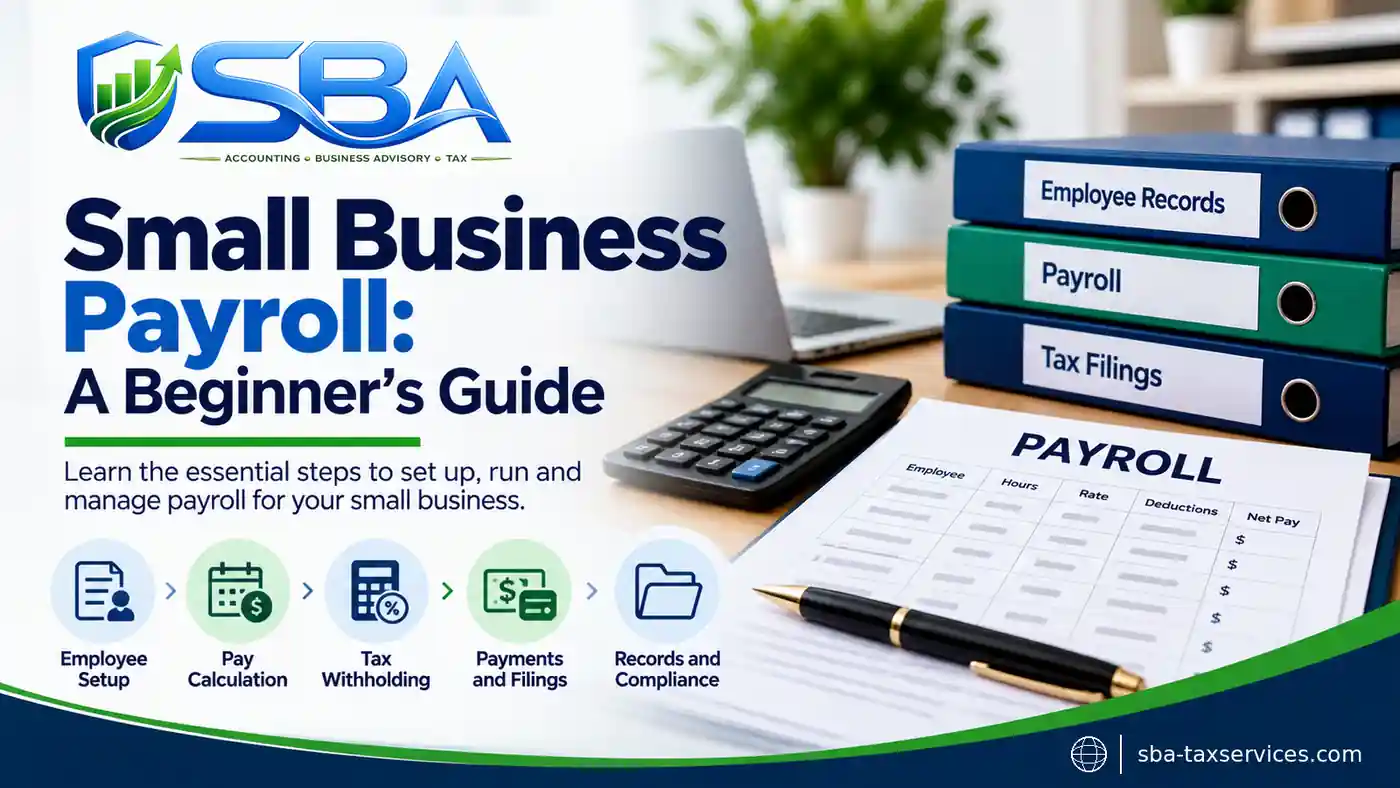
Small business payroll is the process of paying employees accurately and on time while handling required tax withholding, employer taxes, filings, and records. Because payroll affects employees and your business obligations, a repeatable process helps you avoid missed details and keep reliable records.
If you are hiring your first employee or taking payroll in-house, the process may seem complicated at first. However, it becomes easier to manage when you break it into clear stages and follow a consistent schedule. Federal, state, and local requirements can differ, so confirm which rules apply to your business.
In this guide, you’ll learn how to handle employee setup, pay calculations, deductions, payroll tax responsibilities, recordkeeping, and common mistakes. In addition, each stage connects to the next, so a consistent workflow can make the process easier to manage.
04 Payroll taxes 05 Records and mistakes 06 FAQs and next steps
What Is Small Business Payroll and What Does It Include?
In practical terms, small business payroll covers the tasks required to pay employees and account for related obligations. Depending on your business, these tasks may include:
- Collecting employee and tax forms
- Tracking hours, salary, commissions, or other compensation
- Calculating gross pay and deductions
- Paying employees on the established payday
- Withholding and paying applicable employment taxes
- Filing required returns and providing year-end forms
- Keeping payroll and wage records secure
The IRS explains key employer responsibilities in its Hiring Employees guidance. In addition to federal requirements, employers should check state and local rules that apply where employees work.
How to Set Up Small Business Payroll
1. Confirm worker classification
First, determine whether the person is an employee or an independent contractor under the applicable rules. This distinction matters because classification affects tax treatment, forms, and other obligations. Therefore, do not rely only on the label in a contract; instead, review the actual working relationship and seek qualified guidance when it is unclear.
2. Collect required employee information
Next, collect and securely retain the forms and information required for your situation. For example, federal onboarding commonly includes Form I-9 for employment eligibility verification and Form W-4 for federal income tax withholding. Federal onboarding commonly includes Form I-9 for employment eligibility verification and Form W-4 for federal income tax withholding. Also confirm Social Security number and payroll details, and check whether state or local forms are required.
For current instructions, use the IRS employee-hiring checklist and official agency guidance rather than relying on an old checklist.
3. Choose a pay schedule
After collecting the required information, establish a pay frequency, such as weekly, biweekly, semimonthly, or monthly, where permitted. Communicate the schedule clearly and confirm the payday rules for the locations where employees work. A dependable calendar helps you plan payroll processing, tax deposits, and filings.
4. Select a payroll method
At this stage, you can use payroll software, work with a payroll service provider, or manage the calculations internally. To choose appropriately, consider your employee count, pay complexity, available time, reporting needs, and confidence with compliance. Even when a provider processes payroll, the employer should understand its responsibilities and review results.
The Small Business Payroll Cycle: A Step-by-Step Guide
Step 1: Gather time and wage information
To begin each pay run, check hours worked, overtime where applicable, paid leave, salary, commissions, bonuses, and approved adjustments. Compare time records with schedules and approvals before calculating pay. As a result, errors are more likely to be caught before payday.
Step 2: Calculate gross pay
Next, calculate gross pay, which is compensation before deductions. For an hourly employee, begin with hours multiplied by the applicable rate, then account for overtime or other compensation when required. For salaried employees, use the agreed pay basis and applicable wage rules. Review unusual changes before approving the payroll run.
Step 3: Calculate withholding and deductions
Once gross pay is confirmed, calculate applicable federal income tax withholding, Social Security and Medicare taxes, and any required state or local withholding. Also account for authorized benefits or other deductions under applicable law and the employee’s elections. Use current IRS guidance, including Publication 15, Employer’s Tax Guide, for federal employment tax instructions.
Step 4: Pay employees and handle tax obligations
After reviewing the calculations, pay employees using the agreed method and by the required payday. At the same time, track tax deposits and filing deadlines; withholding amounts are not simply extra cash available to the business. Depending on your circumstances, federal employment tax obligations can include deposits and returns, along with state or local requirements.
Therefore, maintain a calendar and assign responsibility for each deadline. Check the applicable agency instructions because deposit schedules and filing obligations depend on factors such as tax liability and employer circumstances.
Step 5: Reconcile and retain records
Finally, compare payroll reports with bank activity, payroll liabilities, and accounting records. This final review helps identify discrepancies before they grow into larger problems. Investigate differences promptly and store payroll registers, time records, tax filings, payment confirmations, and supporting documents securely. This step connects payroll processing with bookkeeping and helps prepare for future reporting.
Before closing each pay period, confirm that employee pay, tax withholding, employer tax amounts, payments, and accounting entries agree. Keep a note of any correction and how it was resolved.
Small Business Payroll Taxes and Filing Responsibilities
Payroll taxes are an important part of running payroll. However, the exact requirements depend on your business and workforce. Federal employment tax responsibilities may involve federal income tax withholding, Social Security and Medicare taxes, employer contributions, and federal unemployment tax when applicable. State and local obligations may also apply.
The IRS Employer’s Tax Guide (Publication 15) explains federal withholding, deposits, reporting, and payment requirements. Use the current edition and verify deadlines for your own situation. If you are unsure how a rule applies, consult a qualified tax professional rather than guessing.
Also remember that payroll rules can change. Review official guidance periodically and update your process when tax rates, forms, employee circumstances, or filing schedules change.
Small Business Payroll Recordkeeping: What Should You Keep?
Moreover, good records help you answer employee questions, reconcile payroll, prepare reports, and support compliance. Depending on the record and applicable rules, you may need to retain:
- Employee identification and tax forms
- Time sheets and hours worked
- Pay rates, gross pay, deductions, and net pay
- Payroll registers and payment records
- Employment tax returns and deposit confirmations
- Year-end wage statements and supporting documentation
Retention periods differ by record type and law. For example, the U.S. Department of Labor’s FLSA recordkeeping guidance describes federal wage-and-hour record requirements. Check the current rules for each record category, including tax and state requirements, before setting a retention schedule.
Common Small Business Payroll Mistakes to Avoid
- Misclassifying workers: review the actual working relationship and applicable tests.
- Missing time or pay adjustments: check hours, overtime, leave, and approved changes before processing.
- Using outdated tax settings: verify current forms, withholding information, and official instructions.
- Missing deposit or filing deadlines: maintain a calendar and confirm which schedule applies.
- Mixing payroll and operating funds: track withheld taxes and payroll liabilities separately in your records.
- Keeping incomplete records: retain payroll reports and supporting documentation securely.
- Assuming software removes employer responsibility: review payroll outputs and resolve exceptions.
For that reason, a checklist and a second review of unusual payroll changes can prevent many avoidable errors. In addition, reconcile payroll with your bookkeeping records after each pay run.
Small Business Payroll Software or a Payroll Service?
Ultimately, the right choice depends on your workforce, the complexity of pay, your budget, and how much time you can devote to administration.
| Approach | May fit when | Consider |
|---|---|---|
| Payroll software | You want guided processing and reporting. | Setup, data entry, review, and deadline management still require attention. |
| Payroll service | You prefer support with recurring payroll tasks. | Understand service scope, responsibilities, reporting, and fees. |
| Internal processing | Your payroll is simple and staff have the required knowledge. | Build in time for accurate calculations, tax updates, and compliance checks. |
Whichever option you choose, establish who checks the payroll, who handles payments and filings, and how corrections are documented.
How Small Business Payroll Connects With Bookkeeping and Tax Planning
Importantly, payroll does not operate in isolation. Payroll expenses, employer taxes, employee deductions, and payments should flow into your accounting records accurately. Therefore, reconciling payroll with bookkeeping helps keep reports useful and makes it easier to investigate differences.
SBA’s payroll services can help businesses manage recurring payroll needs. You can also review bookkeeping services to support organized financial records and business tax advisory services for broader tax planning questions.
In the end, the best process is one in which payroll, bookkeeping, and tax responsibilities are coordinated, with clear ownership of each task and deadline.
Frequently Asked Questions
What does small business payroll include?
It generally includes calculating employee pay, handling applicable deductions and tax withholding, paying employees, meeting tax and filing obligations, and maintaining records. The exact tasks depend on your workforce and applicable federal, state, and local rules.
Can I run payroll myself?
Yes, some small businesses process payroll internally. However, you need a reliable process for wage calculations, current tax requirements, deadlines, payments, and recordkeeping. Consider professional support if the requirements exceed your available time or experience.
What forms do I need when hiring an employee?
Federal onboarding commonly involves Form I-9 for employment eligibility verification and Form W-4 for federal income tax withholding. Additional forms and registrations may apply depending on the employee’s location and your circumstances. Check current official instructions.
How often should I process payroll?
Your pay frequency should comply with applicable wage-payment laws and your established schedule. Weekly, biweekly, semimonthly, and monthly schedules are used in different circumstances, but availability and requirements vary by jurisdiction.
How long should payroll records be kept?
There is no single retention period for every payroll record. Federal wage-and-hour rules and tax rules can set different periods, and state requirements may add obligations. Follow the current rule for each record category.
Does using a payroll service remove my responsibilities?
A provider can handle agreed tasks, but employers should understand their obligations, review payroll reports, confirm that deposits and filings are addressed, and keep their own records of the arrangement.
How does payroll affect bookkeeping?
Payroll creates wage expenses, tax liabilities, deductions, and payments that should be recorded and reconciled in the accounting system. Keeping the systems coordinated helps produce more dependable financial reports.
Build a payroll process you can rely on.
SBA Accounting and Tax Services PLLC supports small businesses with payroll, bookkeeping, and tax advisory services. Contact our team to discuss the support that fits your business.
Important: This guide provides general educational information, not individualized legal, tax, or payroll advice. Requirements depend on your circumstances and can change. Confirm current official guidance or consult a qualified professional.





2 Responses