
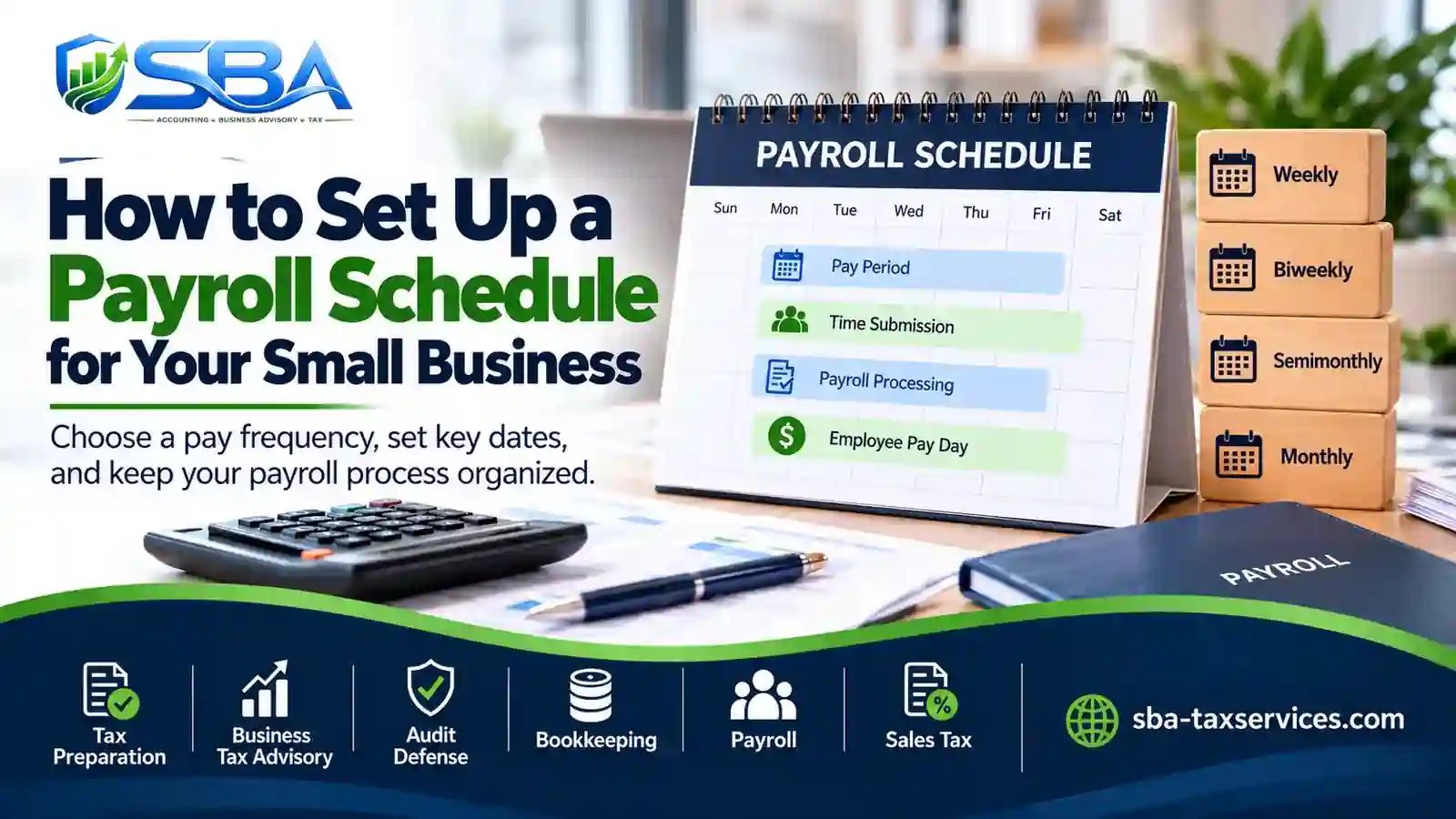
A small business payroll schedule gives you a dependable plan for paying employees and completing the work that must happen before payday. When pay periods, processing dates, bank holidays, tax deposits, and filing deadlines are planned together, payroll becomes easier to manage. However, a schedule must also follow the wage-payment rules that apply to your employees.
In practice, setting up a schedule means choosing a permitted pay frequency, defining each pay period, setting payday, and working backward to establish internal deadlines. In addition, you need a repeatable process for reviewing hours, approving changes, funding payroll, and recording transactions. This guide walks through those decisions step by step.
03 Six setup steps 04 Tax deadlines and common mistakes
What Is a Small Business Payroll Schedule and How Does It Work?
A payroll schedule shows when each pay period begins and ends, when you process payroll, and when employees receive their wages. It can also identify when managers must approve time, when payroll funds must be available, and when related tax obligations need attention.
These dates work together, but you cannot use them interchangeably. For example, the final day of a pay period may fall several days before payday because you need time to review hours and calculate wages. Similarly, a federal payroll tax deposit deadline may differ from the employee payday.
Therefore, build one master calendar with separate reminders for each responsibility. That approach helps owners see what must happen and when.
How to Choose a Payroll Frequency for Your Small Business
Common pay frequencies include weekly, biweekly, semimonthly, and monthly. However, the options legally available to you depend on the jurisdiction and the employees involved. Before choosing a frequency, check the rules that apply to your workforce.
Weekly
You pay employees once each week, usually on a consistent weekday. As a result, this option creates frequent paydays and can suit businesses with weekly timekeeping. On the other hand, it generally requires more payroll runs each year.
Biweekly
You pay employees every two weeks on a set weekday. Consequently, most years have 26 paydays, although the calendar can occasionally produce 27. This option is widely used, but you should plan cash flow and annual payroll costs around the actual calendar.
Semimonthly
You pay employees twice per month, often on fixed dates such as the 15th and the last day of the month. This schedule creates 24 paydays per year. Nevertheless, pay periods vary in length, so hourly wages and timekeeping require careful handling.
Monthly
You pay employees once per month where permitted. Although this may reduce the number of payroll runs, it is not allowed for every worker or in every location. Accordingly, confirm the relevant state and local requirements before adopting a monthly schedule.
For U.S. employers, the U.S. Department of Labor’s state payday requirements page is a useful starting point. If your employees work in Virginia, review Virginia Code § 40.1-29 and verify any exceptions relevant to your situation.
How to Set Up Your Small Business Payroll Schedule in Six Steps
01Confirm the rules that apply
First, identify where employees work and which wage-payment rules apply to them. Then, confirm the permitted pay frequency and any deadlines for delivering wages. If your business has employees in more than one state, check each applicable jurisdiction instead of assuming one rule covers everyone.
02Choose the pay frequency
Next, choose a permitted frequency that fits your workforce, timekeeping process, and cash-flow cycle. Consistency matters; therefore, document your chosen schedule and communicate it clearly to employees. If you change an existing schedule, check the legal notice and timing requirements before making the change.
03Set the pay-period start and end dates
After selecting the frequency, define each pay period. For example, a biweekly schedule might cover two consecutive weeks, with the pay period ending before the payday. Write the exact dates into the calendar so employees and managers can tell which hours belong in each run.
04Work backward from payday
Then, set internal deadlines for submitting time, approving timesheets, reporting leave, entering new-hire or pay-rate changes, reviewing payroll, and funding the payment. Build in enough time to correct errors before payday. In addition, account for bank holidays and weekends, following the rules that apply to the required pay date.
Treat payday as the fixed destination. Schedule approvals, calculations, reviews, and funding earlier so a late timesheet or holiday does not automatically put employee pay at risk.
05Add payroll tax and filing reminders
Employee paydays are only one part of the calendar. Separately, federal payroll tax deposit schedules and return due dates depend on the employer’s circumstances and applicable IRS rules. Therefore, confirm the deposit schedule assigned to your business and record each required deadline. The IRS guidance on depositing and reporting employment taxes explains the general requirements.
Do not assume that money withheld from employees can wait until the next payday to be deposited. Instead, follow the applicable deposit schedule and use the IRS instructions for your business. Federal tax deposits generally must be made electronically unless an exception applies.
06Test the calendar and assign responsibility
Finally, review the calendar for a full year. Check months with extra paydays, holidays, year-end processing, and any changes in staffing. Then assign an owner for each step, such as time approval, payroll processing, final review, payment authorization, and tax-deadline tracking.
After you test the schedule, share the relevant dates with employees and managers. Maintain one master calendar and record every change there instead of relying on scattered messages.
How to Coordinate Payroll Tax Deadlines With Your Payroll Schedule
A small business payroll schedule should point to tax obligations, but it should not treat tax due dates as if they always match payday. Employers may need to withhold federal income tax and employee Social Security and Medicare taxes, pay the employer share of Social Security and Medicare taxes, make deposits, and file required returns.
However, deposit timing depends on the rules that apply to the employer. The IRS generally sets monthly or semiweekly deposit schedules based on lookback-period tax liability, with special rules for some employers. As a result, verify your current schedule rather than relying on a generic online calendar.
For the applicable details, use IRS Publication 15 (2026), Employer’s Tax Guide, together with the IRS’s current depositing and reporting instructions. If your business uses a payroll provider, establish who monitors deadlines and who remains responsible for confirming that deposits and filings were completed.
Common Small Business Payroll Schedule Mistakes to Avoid
- Choosing frequency before checking the law. First confirm which pay intervals are allowed for your employees.
- Leaving too little time for approvals. Set internal deadlines before payday so errors can be reviewed and corrected.
- Ignoring holidays. Check banking and calendar holidays in advance and follow applicable wage-payment rules.
- Forgetting tax deposits. Keep tax deposit and filing reminders separate from employee paydays.
- Not assigning responsibility. Identify who submits, approves, reviews, funds, and verifies each payroll run.
- Failing to update the calendar. When a schedule changes, update the master calendar and notify everyone who relies on it.
Small Business Payroll Schedule Setup Checklist
Before launching the schedule:
- Confirm the pay frequency is permitted
- Document pay-period start and end dates
- Set paydays and holiday procedures
- Set time-submission and approval deadlines
- Plan payroll review and funding dates
- Add tax deposit and filing reminders
- Assign responsibility for each task
- Review the calendar across the full year
- Communicate the schedule and changes clearly
Frequently Asked Questions
What is the most common payroll frequency for a small business?
Weekly, biweekly, semimonthly, and monthly schedules are all used by employers. The right choice depends on the rules for your employees, your timekeeping process, and your operational needs. Therefore, confirm legal requirements before choosing a frequency.
Is biweekly the same as semimonthly payroll?
No. Biweekly payroll occurs every two weeks and usually produces 26 paydays per year. Semimonthly payroll occurs twice each month and produces 24 paydays per year. Consequently, the dates and pay-period lengths differ.
How far in advance should payroll be processed?
There is no single processing lead time for every employer or payroll system. Work backward from the required payday and allow enough time for time approvals, calculations, review, payment submission, and bank processing. In addition, check your payroll provider’s cutoffs and the rules that apply to your employees.
Do payroll tax deadlines always fall on payday?
No. Federal payroll tax deposit and filing deadlines are separate from employee paydays and depend on the applicable IRS requirements. Accordingly, maintain separate reminders and verify the schedule assigned to your business.
What if a payday falls on a holiday?
Plan for holidays before the year begins. The correct handling depends on applicable wage-payment requirements and your payment arrangements; therefore, do not automatically move a payday without checking the rules and communicating the plan.
Can a payroll provider manage the calendar?
A payroll provider may calculate wages, process payments, and remind you about certain deadlines. Nevertheless, your business should document responsibilities and verify that required payments and filings have been completed.
How Your Payroll Schedule Supports Bookkeeping
A consistent payroll calendar also supports accurate bookkeeping. When you process payroll and record it on time, you can track wage expenses, payroll liabilities, payments, and related cash flow more reliably. In addition, regular reconciliation helps identify differences between payroll reports, bank activity, and accounting records.
For related help, explore SBA’s small business payroll guide, payroll services, bookkeeping services, and business tax advisory services.
Maintain a Reliable Small Business Payroll Schedule
A dependable small business payroll schedule is more than a list of paydays. It connects pay periods, processing tasks, employee communication, funding, and tax deadlines in one repeatable system. Therefore, start by confirming the rules that apply, then map each deadline backward from payday and assign clear responsibility.
If payroll administration is taking too much time or deadlines are becoming difficult to track, a professional can help you establish a consistent process.
SBA Accounting and Tax Services PLLC supports small businesses with payroll and related bookkeeping and tax services.
Explore SBA Payroll Services or learn more about our bookkeeping services.
This article provides general educational information, not legal, tax, or payroll advice for a specific situation. Requirements can vary by jurisdiction and employer. Verify current rules and deadlines with the appropriate government agency or qualified professional.






One Response