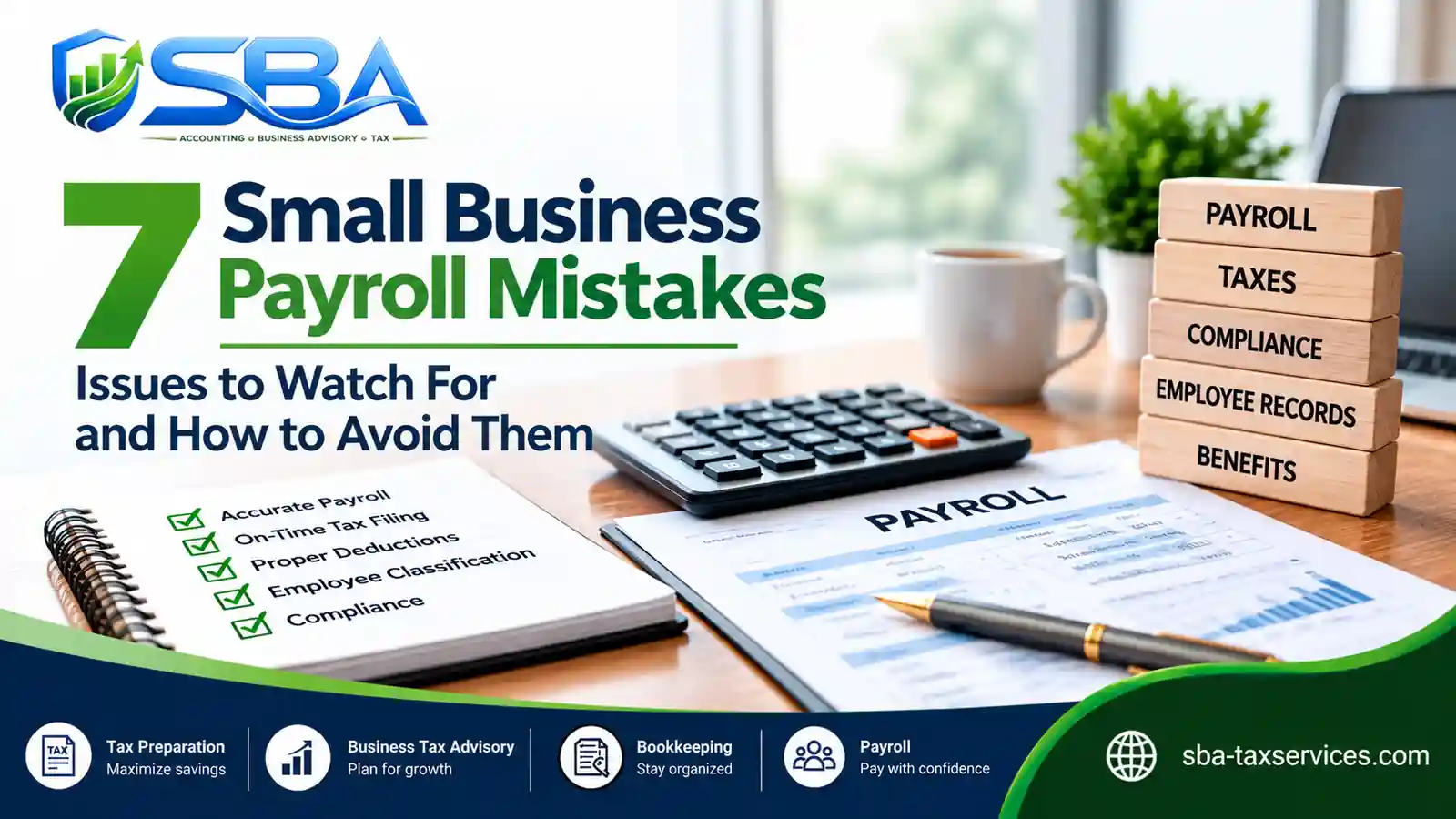
Payroll is more than issuing paychecks. For a small business, it also means tracking hours accurately, applying the right tax treatment, meeting filing and deposit deadlines, and keeping reliable records. When these steps are rushed or handled inconsistently, small business payroll mistakes can lead to employee frustration, corrected filings, avoidable costs, and compliance problems. Therefore, a consistent review process is essential for preventing small business payroll mistakes before they affect employees or business records.
The good news is that many payroll problems can be reduced with a repeatable process. Below are seven common mistakes to watch for, plus a practical checklist you can use before each payroll run.
Use a consistent payroll calendar, verify employee and time data, review worker classification, reconcile payroll reports, and protect records. In addition, confirm tax obligations against current IRS and Department of Labor guidance rather than relying on memory alone.
In This Guide
- Missing payroll and tax deadlines
- Misclassifying employees and independent contractors
- Using inaccurate employee information
- Making mistakes in hours, wages, or overtime
- Calculating withholding and payroll taxes incorrectly
- Failing to reconcile payroll records
- Keeping incomplete or insecure payroll documentation
1. Small Business Payroll Mistakes: Missing Deadlines
Payroll has several clocks running at once: employee paydays, tax deposits, payroll tax returns, and year-end forms. Because deposit schedules and filing deadlines can differ, assuming every obligation is due on the same date is risky.
Instead, maintain a calendar that lists each payday, payroll processing cutoff, tax deposit date, filing deadline, and year-end reporting task. Assign an owner and a backup for every recurring responsibility. Then review the calendar at the start of each month and before holidays or staff absences. This simple control reduces deadline-related small business payroll mistakes.
Check the IRS guidance on employment tax due dates and confirm which schedule applies to your business.
2. Misclassifying Employees and Independent Contractors
Worker classification affects tax withholding, reporting, and employment obligations. A contract label or a worker’s preference does not, by itself, determine whether the person is an employee or an independent contractor. The actual working relationship matters.
Review how the work is performed, the degree of control involved, and the financial and relationship factors relevant under applicable rules. If the facts are unclear, seek qualified advice before deciding how to report payments. As a result, you can reduce classification-related small business payroll mistakes before they affect withholding or reporting. For a starting point, review the IRS information about businesses with employees.
3. Payroll Mistakes: Inaccurate Employee Information
Small data-entry errors can travel through an entire payroll cycle. A misspelled name, incorrect address, wrong tax form information, outdated pay rate, or inaccurate bank details can create rework and delay corrections.
Before processing payroll, verify new-hire details and changes against approved documentation. Use a controlled process for updates, limit access to sensitive information, and ask employees to report changes promptly. Also, avoid making edits from informal messages without confirming the details and keeping an appropriate record of the approval. These checks can prevent data-related small business payroll mistakes from repeating each pay period.
4. Payroll Mistakes: Hours, Wages, or Overtime
Payroll is only as accurate as the time and pay data behind it. Missed shifts, duplicate hours, incorrect pay rates, unpaid work time, or overtime calculations can result in underpayments or overpayments. Therefore, establish a clear timekeeping and approval process before payday.
Review timesheets for missing entries and unusual changes, confirm current pay rates, and check overtime treatment under the rules that apply to the worker and business. Keep records of corrections and approvals. As a result, your team can catch small business payroll mistakes before checks are issued. The U.S. Department of Labor explains relevant employer recordkeeping duties in its FLSA recordkeeping guidance.
5. Payroll Mistakes: Incorrect Tax Withholding
Payroll tax calculations depend on employee information, wages, current rules, and the type of payment. Errors can happen when tax settings are not updated, taxable benefits are overlooked, or a business assumes its payroll software has automatically handled every decision.
Review payroll reports before finalizing each run and investigate unexpected changes in gross pay, deductions, withholding, or employer taxes. In addition, reconcile tax deposits and filings to payroll records. This review can help identify small business payroll mistakes caused by outdated settings or incorrect inputs. The IRS provides an overview of understanding employment taxes; use current official guidance when confirming your responsibilities.
6. Failing to Reconcile Payroll Records
Processing payroll is not the final control. If payroll registers, bank transactions, tax liabilities, and accounting entries are not compared, discrepancies may remain unnoticed until month-end, quarter-end, or year-end.
After each run, compare the approved payroll register with the amounts paid and the related entries in your books. Then review payroll liabilities and tax payments on a regular schedule. Investigate differences promptly, document the resolution, and make sure adjustments are reflected consistently in payroll and accounting records. In turn, this reconciliation helps uncover small business payroll mistakes while they are still easier to correct.
For broader financial controls, connect this routine with your regular payroll recordkeeping process and bookkeeping close.
7. Payroll Mistakes: Incomplete or Insecure Records
Payroll records help explain what was paid, why it was paid, and how required amounts were calculated. Incomplete records make it harder to answer employee questions, investigate differences, prepare reports, or respond to an inquiry. At the same time, payroll files contain sensitive personal and financial information that should not be broadly accessible.
Maintain the records required for your situation, follow applicable retention periods, and store files in a secure location with access limited to authorized people. Create a consistent naming and filing method, retain approvals for adjustments, and make sure a backup person can locate essential records when needed. These habits also reduce small business payroll mistakes during audits, year-end reporting, and staff handovers.
A Practical Payroll Review Checklist
- Confirm the pay period, payday, and processing cutoff.
- Verify approved hours, pay rates, overtime, and changes.
- Check employee details and worker classifications when circumstances change.
- Review gross pay, deductions, withholding, and employer tax totals.
- Confirm required tax deposits and filing dates on the payroll calendar.
- Compare the payroll register with payments and accounting entries.
- Store payroll reports, approvals, and supporting records securely.
Use the checklist consistently, even when payroll feels routine. If you use a payroll provider, clarify which tasks the provider handles and which remain your responsibility. Most importantly, keep the same review steps for every pay cycle so small business payroll mistakes do not slip through simply because the process feels familiar. For related process guidance, see our small business payroll schedule and first-employee payroll checklist.
Frequently Asked Questions
What is the most common payroll mistake for a small business?
There is no single mistake that applies to every business. However, inaccurate time and pay data, missed deadlines, incorrect worker classification, and unreconciled payroll records are common areas to review. A repeatable process helps catch issues earlier.
How can a small business reduce payroll errors?
Use a documented payroll calendar, limit who can change employee data, require time approvals, review payroll reports before payment, and reconcile payroll to bank and accounting records afterward. Also, assign a backup person and keep a record of corrections.
Does using payroll software guarantee compliance?
No. Software can automate calculations and reminders, but it relies on correct setup and data. Employers should understand their responsibilities, review exceptions, and confirm which filings, deposits, and records are covered by their service arrangement.
How long should payroll records be kept?
Retention requirements vary by record type and applicable federal, state, and local rules. Check the requirements that apply to your business and maintain a consistent retention policy rather than applying one time period to every document.
Build a More Reliable Payroll Process
Consistent payroll controls can help you protect employee trust, keep records organized, and reduce avoidable rework. SBA Accounting and Tax Services PLLC can help your business strengthen its bookkeeping and payroll processes.
Contact SBA Accounting and Tax Services PLLC
Explore our accounting and tax services to learn more.
Disclaimer: This article provides general educational information and is not legal, tax, or payroll advice for a specific situation. Requirements can vary by jurisdiction and circumstances. Confirm current obligations with official sources or a qualified professional.